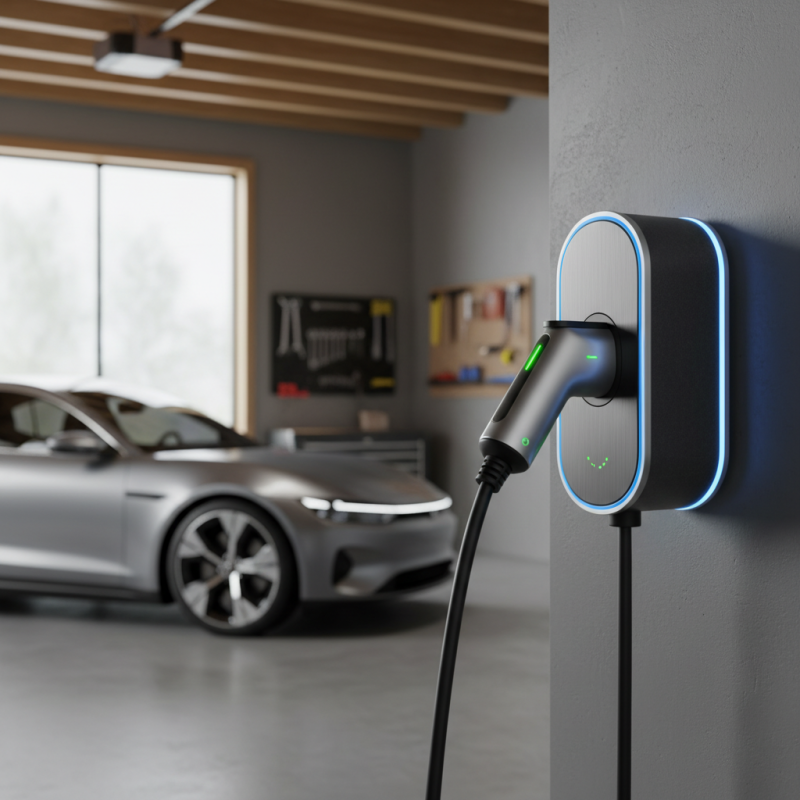
2026 Best Ev Charger Wall Plug for Home Use?
As the world shifts toward electric vehicles, finding the right Ev Charger Wall Plug for home use becomes crucial. Home charging offers convenience and efficiency. A good wall plug ensures your electric vehicle is ready when you are.
The 2026 market presents several options. Each product has its strengths and weaknesses. Some chargers boast fast charging times, while others offer smart features. Think carefully about your needs. A charger should fit your lifestyle and vehicle requirements.
Considering installation can be tricky. Will you need professional help? Are there compatibility issues with your vehicle? These are important questions. A little research can save time and frustration. Ultimately, the right EV charger wall plug enhances your electric vehicle ownership experience.
2026 Trends in Home EV Charger Wall Plug Technology
The growth of electric vehicle (EV) adoption signals a shift in home charger technology. Recent reports indicate that by 2026, up to 30% of U.S. households may own an EV. This suggests a heightened demand for efficient wall plug chargers. New advancements focus on fast charging capabilities. Many chargers now can provide up to 10 miles of range per hour, reducing waiting times significantly.
Home EV chargers are increasingly integrating smart technology. Data shows that over 50% of new models will feature Wi-Fi connectivity by 2026. This allows users to schedule charging during off-peak hours, maximizing efficiency. Moreover, the market is seeing a rise in universal compatibility. A growing number of chargers can handle various EV models, which simplifies choices for consumers.
However, challenges remain. Not all homes are equipped with the necessary electrical infrastructure. Older homes may require costly upgrades. Many users may overlook these aspects, focusing solely on the charger price. Awareness about installation costs is crucial. The balance between affordability and efficiency must be carefully considered. As we project into 2026, the landscape of home EV chargers will continue to evolve.
Key Features to Consider for 2026 EV Chargers for Home Use
When choosing an EV charger wall plug for home use in 2026, several key features will stand out. One of the primary considerations is charging speed. A faster charger can significantly reduce the time your vehicle needs to be plugged in. Look for options that offer adjustable amperage settings. This allows for more control based on your electrical system and daily driving habits.
Another important feature to consider is the connector type. Compatibility with various EV models is crucial. Researching the types of connectors available ensures you select a charger that meets your needs. Additionally, checking for weatherproofing can prevent damage from outdoor elements if your charger is installed outside.
Safety features are necessary, but they can be complex. Built-in overheating protection and surge protectors are essential. Some chargers may come with smart technology, allowing for energy management. However, not all models are user-friendly. Sometimes, the more features they have, the harder they are to understand. Make sure to read user reviews. They often highlight common issues or praises that could affect your decision.
2026 Best EV Charger Wall Plug for Home Use - Key Features to Consider
| Charger Type | Power Output (kW) | Charging Time (Hours) | Connectivity Options | Safety Features | Price Range (USD) |
| Level 2 Charger | 7.2 kW | 4-6 Hours | Wi-Fi, Bluetooth | Overcurrent Protection, Ground Fault Protection | 500 - 700 |
| Smart Charger | 9.6 kW | 3-5 Hours | Wi-Fi, Mobile App | Surge Protection, Automatic Shut-off | 600 - 800 |
| Portable Charger | 3.8 kW | 8-12 Hours | None | Overheating Protection | 200 - 400 |
| Fast Charger | 22 kW | 1-2 Hours | Wi-Fi, Cellular | Overvoltage Protection, Emergency Stop | 1,000 - 1,500 |
Comparative Analysis of EV Charger Prices and Efficiency Ratings
When selecting an EV charger for home use, price and efficiency matter significantly. Many options exist, each with unique features. The average price for a standard home EV charger ranges from a few hundred to over a thousand dollars. However, price doesn't always equate to efficiency. Some cheaper models can charge vehicles slower than expected, potentially leading to frustration.
Efficiency ratings reveal how quickly and effectively a charger works. Some chargers boast high efficiency but come at a high cost. It's essential to understand that charging speed can depend on several factors. For example, the vehicle’s battery size and the charger's output power play a critical role. Some users find it challenging to balance cost with efficiency.
Moreover, energy consumption can vary widely. Some chargers are more energy-efficient than others. A thorough review of energy usage can unveil hidden costs. Many homeowners feel overwhelmed by options available. Taking the time to research can lead to a better purchase. Are you choosing based on features or price? This question is crucial for making an informed decision.
Safety Standards and Certifications for Home EV Charging Equipment
When considering home EV chargers, safety standards are paramount. Teslas and other electric vehicles rely on reliable charging equipment. A 2022 report by the International Electrotechnical Commission (IEC) highlights that over 70% of charging accidents stem from non-compliant chargers.
Regulatory bodies like the Underwriters Laboratories (UL) establish strict guidelines. Products with UL certification meet rigorous safety benchmarks. These certifications can reduce risks associated with electrical faults, ensuring user safety. Reports indicate that compliant chargers have 40% fewer incidents compared to non-certified ones.
Additionally, the National Fire Protection Association (NFPA) emphasizes the significance of using UL-listed products. EV charger installations must comply with the National Electric Code (NEC). Even minor deviations can compromise safety. Many homeowners overlook these standards, leading to potential hazards. Electrical shocks and fire risks increase when standards are ignored. This raises an important discussion about awareness and compliance in residential charging solutions.
Future-Proofing: Compatibility with Upcoming EV Models in 2026
As we look toward 2026, home EV charging solutions must be adaptable. With numerous models entering the market, ensuring compatibility is crucial. Reports suggest that by 2026, nearly 30% of cars sold in the U.S. will be electric. Selecting a charger that aligns with these models is essential for future-proofing.
Consider the charging standards. Many EVs plan to support CCS and NACS connectors. Though these standards promise widespread compatibility, variations exist. Not all chargers can handle fast charging capabilities. This mismatch could lead to longer wait times. It's wise to stay informed about the evolving landscape of EV technology.
Tip: Always check the specifications. Research which connectors are used by your preferred vehicle brands. Additionally, opt for a charger that supports upgrades, if possible. This flexibility can save you from needing a complete replacement in just a few years. Investing in smart technology is wise. These chargers offer features like scheduling and monitoring, optimizing your home energy use.
Too often, consumers overlook installation costs or the need for electrical upgrades. Potential challenges may arise if your home’s infrastructure isn’t up to code. Assessing your home’s capacity early can streamline the process.