How to Choose the Best Solar Power Installation for Your Home
As the world increasingly shifts towards renewable energy, the decision to invest in solar power installation becomes more crucial for homeowners. According to Dr. Emily Reynolds, a leading expert in renewable energy systems, "The transition to solar power not only reduces carbon footprints but also offers significant savings on energy bills." With the rising concerns over climate change and escalating utility costs, many homeowners are contemplating the benefits of installing solar panels.
Choosing the best solar power installation for your home involves considering various factors such as the type of solar technology, system size, and installation quality. Each home comes with unique energy needs, making it essential to tailor your solar solution accordingly. Understanding these elements is vital for making informed decisions that align with both your energy goals and financial considerations.
Moreover, the solar power installation market is full of options, from different panel technologies to installation services. It can be overwhelming for homeowners to navigate through the available choices. Therefore, having a clear guideline can empower you to select the best solar power installation that meets your specific requirements, ensuring you harness the full potential of solar energy for your home.

Understanding Your Energy Needs for Solar Power Installation
Understanding your energy needs is a crucial first step when considering solar power installation for your home. According to the U.S. Energy Information Administration, the average American household consumes about 877 kWh per month, which translates to approximately 10,500 kWh annually. To maximize the benefits of solar energy, it's essential to assess your current energy usage. This can involve reviewing past utility bills, considering seasonal variations in energy consumption, and identifying areas where energy efficiency can be improved.
Once you have a clear picture of your energy needs, you can determine the capacity of the solar system that would be appropriate for your home. A typical residential solar panel produces about 300 watts of power, meaning you would need roughly 20-25 panels to meet the energy needs of an average household. Additionally, the National Renewable Energy Laboratory suggests that homeowners should account for factors such as geographic location, roof orientation, and shading when calculating potential solar energy production. By understanding these elements, you can ensure that your solar investment aligns with both your short-term energy needs and long-term sustainability goals.
Evaluating Different Types of Solar Power Systems Available
When evaluating different types of solar power systems available for your home, it's essential to understand the distinctions between the leading options on the market. The most common types include grid-tied, off-grid, and hybrid systems. A grid-tied system is connected to the utility grid, allowing homeowners to benefit from net metering, where excess electricity generated can be sold back to the grid. According to a report from the National Renewable Energy Laboratory, approximately 80% of residential solar installations are grid-tied due to their cost-effectiveness and simplicity.
On the other hand, an off-grid system is ideal for those seeking independence from the utility grid. These systems typically employ batteries to store energy, making them perfect for remote locations but can be more expensive upfront. The International Energy Agency notes that as battery technology improves, the viability of off-grid solar installations is becoming more appealing, particularly in areas with unreliable electricity access. Hybrid systems offer a combination of both approaches, providing flexibility and reliability by utilizing the grid when needed and stored energy when offline.
Tips: When selecting a solar power system, consider your energy needs and patterns. Conduct a detailed analysis of your monthly energy consumption to determine the system size required for your home. Additionally, evaluate local incentives and rebates, as these can significantly impact the overall cost and return on investment of your solar installation.
How to Choose the Best Solar Power Installation for Your Home - Evaluating Different Types of Solar Power Systems Available
| Solar Power System Type |
Efficiency (%) |
Cost per Watt ($) |
Lifespan (Years) |
Ideal Installation Location |
| Monocrystalline |
15-22 |
$3 - $4 |
25 |
Residential and Commercial |
| Polycrystalline |
13-16 |
$2 - $3 |
25 |
Residential |
| Thin-Film |
10-12 |
$1 - $2 |
10-20 |
Areas with Space Limitations |
| Bifacial |
15-20 |
$3 - $5 |
25 |
Open Areas and Roofs |
Assessing Solar Installation Companies and Their Credentials
When considering solar power installation for your home, it is crucial to thoroughly assess solar installation companies and their credentials. Start by researching the experience and expertise of various companies in your area. Look for installers who have been in the business for several years and have a proven track record of successful installations. Check if they have certifications from recognized industry organizations, as these credentials often indicate adherence to best practices and quality standards.
Additionally, customer reviews and testimonials can provide valuable insights into a company’s reputation and reliability. Reach out to previous clients to learn about their experiences. Pay attention to aspects such as responsiveness, professionalism, and the quality of post-installation support. It’s essential to choose a company that not only excels in installing solar panels but also offers ongoing maintenance and assistance, ensuring your system operates efficiently over its lifespan. By conducting thorough research and evaluation, you can find the best solar installation partner for your home.
Comparing Costs, Incentives, and Financing Options for Solar
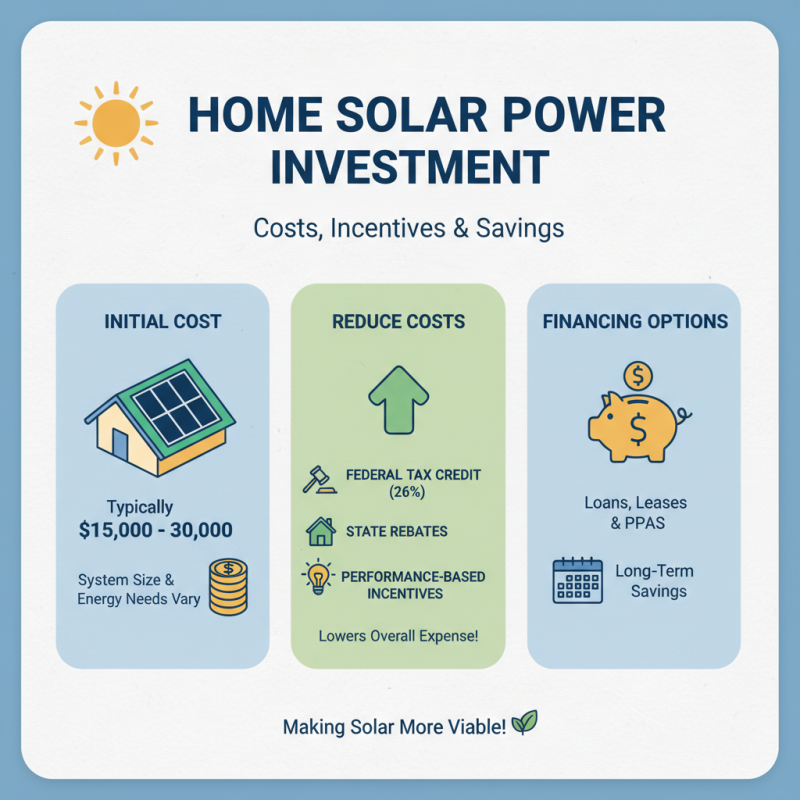
When considering solar power installation for your home, understanding the costs, incentives, and financing options available can significantly impact your decision. The initial investment in solar panels can be substantial, typically ranging from $15,000 to $30,000 depending on the system size and your energy needs. However, this upfront cost can often be mitigated through various state and federal incentives. Tax credits, rebates, and performance-based incentives can lower the overall expense, making solar energy a more financially viable option for homeowners.
Financing options also play a critical role in the accessibility of solar technology. Homeowners can explore multiple pathways such as solar loans, leases, or power purchase agreements (PPAs). A solar loan allows you to purchase the system outright, which can lead to greater savings over time. Conversely, leases and PPAs can reduce upfront costs but may offer limited long-term financial benefits since you aren't the system owner. By carefully assessing these factors, consumers can choose a solar installation that fits their budget and energy requirements while taking full advantage of available incentives.
Planning for Maintenance and Upgrades After Installation
When planning your solar power installation, it's crucial to consider future maintenance and upgrades. According to the , regular maintenance can enhance the lifespan of solar panels significantly, typically extending their functionality beyond the standard 25 years. Neglecting maintenance could lead to efficiency losses of up to 15%, making it essential to establish a schedule for inspections and cleaning.
Tips: Regularly checking the system for shading obstructions and dirt buildup can maximize energy production. Utilize professional services for comprehensive evaluations and consider installing monitoring systems to keep track of performance metrics.
Upgrades are also an integral part of your solar power strategy. As technology evolves, newer systems may offer better efficiency and functionality. The Solar Energy Industries Association suggests that homeowners keep an eye on advancements in battery storage solutions, which can increase energy independence and reduce reliance on the grid. Investing in compatible upgrades when available ensures that your system remains efficient and can adapt to future energy demands.
Tips: Set aside a budget for potential upgrades and stay informed about new technological developments in the solar market to make timely decisions that could improve your energy efficiency and savings.