How to Choose the Best Solar Power System for Your Home and Save Money
When considering the transition to renewable energy, one of the most impactful decisions homeowners can make is investing in a solar power system. As energy costs continue to rise and environmental concerns intensify, many are turning to solar solutions to harness the sun's abundant energy. Choosing the best solar power system for your home not only contributes to a sustainable future but also offers significant financial savings in the long run. With various options available, understanding your energy needs, the local climate, and available incentives is crucial in making an informed decision.
Selecting the right solar power system involves a thorough analysis of your household's energy consumption, roof characteristics, and financial goals. Not only does an optimal system enhance energy efficiency, but it also maximizes your return on investment. This guide will delve into essential factors to consider, helping you navigate the options available and identify the solar power system that best aligns with your family's needs. By making a well-informed choice, you can embark on a rewarding journey towards energy independence and cost savings.

Understanding Your Energy Needs Before Choosing a Solar Power System
Understanding your energy needs is crucial when selecting the best solar power system for your home. According to the U.S. Energy Information Administration (EIA), the average American household consumes about 877 kWh per month. To tailor a solar system effectively, it's essential to analyze your past energy consumption patterns, factoring in seasonal variations and lifestyle changes. Utilizing tools like energy audits can provide detailed insights into your consumption habits, helping you determine the appropriate size and capacity for your solar power system.
Moreover, identifying your energy goals is pivotal in optimizing cost savings. A report by the National Renewable Energy Laboratory (NREL) indicates that installing a well-sized solar system can reduce electricity bills by approximately 80% over its lifetime. Homeowners should also consider future energy needs, such as potential expansions or the addition of electric vehicles, which may increase demand. By calculating both current and projected energy use, homeowners can select a solar solution that not only meets their needs but also maximizes their return on investment, paving the way for sustainable savings in the long run.
Evaluating Different Types of Solar Power Systems for Home Use
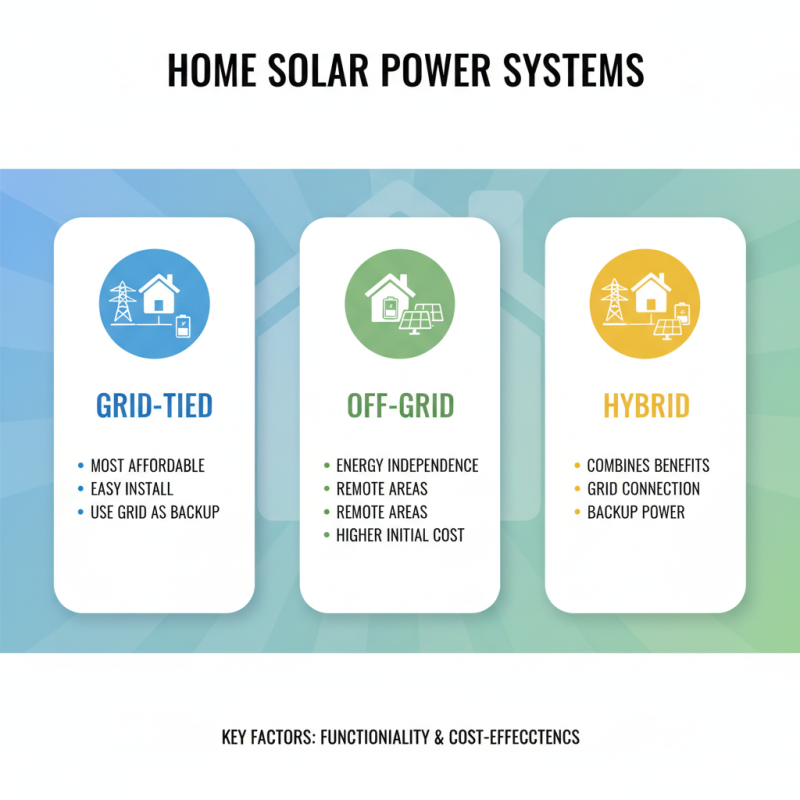
When evaluating different types of solar power systems for home use, it's essential to consider several key factors that can affect both functionality and cost-effectiveness. First, identify whether you prefer a grid-tied, off-grid, or hybrid system. Grid-tied systems are typically more affordable and easy to install, allowing homeowners to draw power from the grid when solar production is insufficient. In contrast, off-grid systems provide complete energy independence, which can be advantageous in remote areas but usually come with higher initial costs. Hybrid systems combine the benefits of both, providing a backup power source while still allowing for grid connection.
Tips: When selecting a solar power system, consider your long-term energy needs and potential expansion options. If you anticipate increased electricity usage in the future, it might be wise to invest in a slightly larger system now. Additionally, research local incentives and tax credits that can significantly reduce installation costs.
Another important factor to evaluate is the type and efficiency of solar panels available. Monocrystalline panels tend to offer higher efficiency rates and occupy less space, making them ideal for homes with limited roof area. Polycrystalline panels, while generally less efficient, are often more affordable and can be suitable for larger roof spaces. Consider your home's specific roof characteristics and energy consumption patterns when making this choice.
Tips: Always obtain multiple quotes from different solar providers, ensuring that you compare not just prices but also the efficiency ratings and warranties offered. A robust warranty can provide peace of mind and protect your investment in the long run.
Key Features to Look for in a Solar Power System
When selecting a solar power system for your home, there are several key features to consider to ensure it meets your energy needs and helps you save money in the long run. First and foremost, evaluate the system's efficiency. Solar panel efficiency can vary significantly, so choose a system that converts the maximum amount of sunlight into electricity. High-efficiency panels might have a higher upfront cost, but they generate more power and can lead to greater savings on your energy bills over time.
Another essential feature to look for is the inverter type. The inverter is a crucial component that converts the direct current generated by solar panels into alternating current for your home's use. There are primarily three inverter types: string inverters, microinverters, and power optimizers. Each has its advantages and drawbacks, so consider your specific installation requirements, shading issues, and performance goals when deciding which type is best for your system. Additionally, pay attention to the system's warranty terms and performance guarantees, as these can provide peace of mind regarding the longevity and reliability of your solar investment.
How to Choose the Best Solar Power System for Your Home and Save Money - Key Features to Look for in a Solar Power System
| Feature |
Description |
Importance |
Estimated Savings (%) |
| Panel Efficiency |
The percentage of sunlight converted into usable electricity. |
High efficiency panels can produce more energy in limited space. |
15%-30% |
| Durability |
Resistance to weather and temperature variations. |
Long-lasting systems reduce long-term replacement costs. |
10%-20% |
| Inverter Type |
Type of inverter (string, micro, or power optimizer) impacts energy conversion. |
Choosing the right type can optimize energy production. |
5%-15% |
| Warranty |
Coverage duration for performance and products. |
Longer warranty indicates reliability and manufacturer confidence. |
Varies, typically adds value. |
| Cost per Watt |
The price of the system relative to its total output capacity. |
Lower cost per watt can lead to better financial returns. |
20%-35% |
Calculating the Long-Term Savings of Solar Energy Investments
Calculating the long-term savings of solar energy investments is essential for any homeowner considering a solar power system. According to the Solar Energy Industries Association (SEIA), installing solar panels can save a homeowner tens of thousands of dollars over the lifespan of the system, which can range from 25 to 30 years. By taking advantage of federal tax credits and local incentives, homeowners can see an average return on investment (ROI) of about 20% to 30%, significantly outperforming traditional investments such as stocks or bonds. Furthermore, with energy costs expected to rise by an average of 2% to 3% annually, homeowners with solar energy systems can effectively hedge against these increasing utility prices.
When calculating potential savings, it’s important to consider the specific energy needs of your household. Factors like energy consumption patterns, local solar incentives, and the size of the solar system can greatly influence overall savings. The National Renewable Energy Laboratory (NREL) reports that an adequately sized solar system can cover 70% to 100% of a home's energy needs, leading to savings that could range from $10,000 to over $30,000.
Tips: Before making a decision, analyze your electricity bills and assess your energy consumption. Also, research available local incentives and rebates, as they can considerably impact your upfront cost and long-term savings. Lastly, consult with a solar energy specialist to determine the optimal system size that meets your energy needs and maximizes annual savings.
Government Incentives and Rebates for Solar Power Installation
Government incentives and rebates for solar power installation can significantly reduce the initial costs associated with setting up a solar power system in your home. Many regions offer tax credits that allow homeowners to deduct a portion of the installation costs from their federal income tax. For instance, incentives may cover a percentage of the overall expenses, making solar power more accessible and financially feasible. It is essential for potential solar buyers to research local, state, and federal programs, as these can vary significantly depending on location.
In addition to tax credits, many governments provide rebates directly from local utility companies or through state-run programs. These rebates can further lower the cost of solar panel installation, often issued as a straightforward cash incentive. Homeowners might also benefit from net metering policies, allowing them to sell excess energy back to the grid, which can provide additional savings over time. Understanding these financial incentives can be a crucial step in choosing the best solar power system while ensuring maximum savings for your home.