• Cleveland QLD 4163 Find us on Facebook

  • Why Choose an End Dump Truck for Global Hauling?

    Why Choose an End Dump Truck for Global Hauling?

    Moving bulk materials across borders requires more than a large engine and a deep body. It demands predictable unloading, strong structural design, and careful route planning. An End Dump Truck can support these needs on construction sites, quarries, agricultural projects, and infrastructure developments.

    Fleet consultant Jim Meil once observed, “A productive truck spends more time moving material than waiting.” That principle explains the appeal of end dump equipment. Its hydraulic hoist raises the body and releases materials quickly. A driver can unload gravel, sand, soil, or crushed stone within minutes. Less waiting can improve daily productivity.

    But speed is not everything.

    During field evaluations, operators often notice practical details first. A stable frame matters on uneven ground. Strong tailgate hinges matter when sticky clay refuses to slide. Clear controls matter when visibility falls during rain or dust. These small points affect safety, uptime, and driver confidence.

    An End Dump Truck also suits international hauling strategies because manufacturers offer different axle layouts, body capacities, suspension systems, and emission configurations. Buyers can match equipment with local roads and project demands. However, choosing the largest available model is not always wise. Narrow routes, bridge limits, fuel prices, and regional maintenance support can change the decision.

    This choice requires honest reflection. A truck may promise impressive capacity, yet poor loading practices can reduce stability. Skilled operators remain essential. Regular inspections remain essential too.

    For global fleets, the strongest solution is not simply the biggest truck. It is the most suitable truck, supported by reliable parts, trained technicians, and realistic operating data.

    Why Choose an End Dump Truck for Global Hauling?

    What Is an End Dump Truck and How Does It Work?

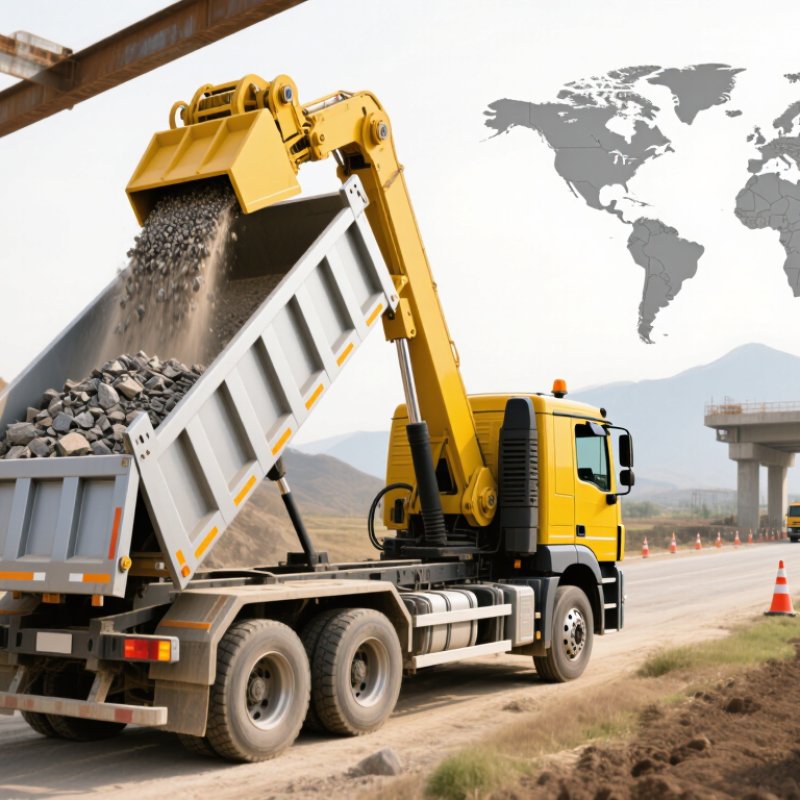
    An end dump truck is a hauling vehicle with a hinged body that raises at the front. Hydraulic cylinders lift the body, allowing cargo to slide through the open rear. The operator controls this movement from the cab, while the frame supports the changing load position. Simple in principle. Demanding in practice.

    During loading, weight should spread evenly across the body. Uneven material can shift the center of gravity and reduce stability. At the delivery site, the driver checks ground firmness, overhead clearance, and nearby workers. The truck stops level whenever possible. Then, the tailgate opens or releases, and hydraulic pressure raises the body gradually. Gravel, sand, soil, and similar bulk materials usually discharge quickly, reducing manual handling and turnaround time.

    For global hauling, an end dump truck can suit routes where unloading speed matters. Its configuration supports construction, quarry, agricultural, and infrastructure work in varied conditions. However, climate, axle limits, road quality, and local safety rules affect the proper specification. Cold weather can slow hydraulic response. Wet ground can create dangerous tipping conditions. Experienced operators do not treat a fast cycle as a safe cycle. The design is efficient, but not perfect. I would inspect hydraulic lines, hinges, tires, and the tailgate before every shift, because small faults become expensive when a loaded body rises.

    Which Loads and Hauling Conditions Suit End Dump Trucks?

    Why Choose an End Dump Truck for Global Hauling?

    End dump trucks suit free-flowing bulk loads such as sand, gravel, crushed stone, and dry soil. Their rear-mounted hoist raises the body and releases material quickly. This saves time at quarries, road projects, and large construction sites.

    They perform best on firm, reasonably level ground with enough space for unloading. Wide access roads make positioning easier. Short loading cycles can improve daily output, especially when haul distances are moderate. However, wet clay may stick inside the body and slow discharge. Uneven ground also increases rollover risk when the body is raised. That detail is easy to underestimate.

    Tips: Check the load’s moisture, density, and flow before selecting the truck. Confirm axle limits, body capacity, tire condition, and site clearance. Operators should lower the body before moving and inspect the ground after rain. A spotter can help near stockpiles, slopes, and overhead obstacles.

    For long-distance hauling, route quality matters as much as payload. End dump trucks can handle rough approaches, but severe gradients and soft shoulders demand careful planning. Field assessments should include turning space, bridge restrictions, weather changes, and unloading procedures.

    The most suitable truck is not always the largest one. A smaller unit may work better where roads are narrow or receiving areas are crowded. Mistakes happen when teams choose capacity before studying the jobsite.

    Why End Dump Trucks Support Efficient Global Transport

    Why Choose an End Dump Truck for Global Hauling?
    Why End Dump Trucks Support Efficient Global Transport

    End dump trucks support efficient global transport by moving loose materials in fewer handling cycles. Their rear discharge suits gravel, sand, aggregate, soil, and construction waste. This matters where transfer yards have limited space or uneven ground. A hydraulic lift raises the trailer, allowing rapid unloading without manual shoveling. Less waiting can improve fleet utilization, although poor site planning can erase that advantage.

    The U.S. Department of Transportation’s Freight Analysis Framework projects freight volume to rise from 19.8 billion tons in 2017 to 28.7 billion tons by 2050. This growth increases pressure on regional hauling networks. End dump equipment can help absorb that demand through high payload capacity and quick turnaround. However, payload must match axle limits, road conditions, and local operating rules. Bigger is not always better. Fuel use, tire wear, and rollover exposure require careful review.

    Tips: Confirm loading height, material density, route gradients, and unloading clearance before deployment. The World Bank’s 2023 Logistics Performance Index highlights timeliness and shipment reliability as core logistics measures. Track cycle time, waiting time, maintenance events, and fuel consumption monthly. Real field data often challenges initial estimates. That is useful. Adjusting routes and loading practices can improve efficiency more than simply adding trucks.

    How Do End Dump Trucks Compare With Other Hauling Options?

    Why Choose an End Dump Truck for Global Hauling?

    End dump trucks offer a practical balance between payload, maneuverability, and unloading speed. Their rear-hinged bodies discharge materials quickly on many construction and infrastructure sites. Compared with side dump trucks, they usually need less lateral clearance during unloading. This helps on narrow roads or crowded work areas. However, side dump designs can provide better stability on uneven ground. No option wins every route.

    Bottom dump trucks release material through gates beneath the body. They support controlled spreading across long road sections, but they need suitable ground clearance and loading conditions. Flatbed trailers handle diverse cargo, yet they often require extra equipment for securing and unloading materials. End dump trucks remain flexible for sand, gravel, soil, and demolition debris. Their usefulness depends on local road rules, axle limits, climate, and maintenance support.

    Tips: Match the body size to the loading equipment. A large body can increase waiting time and uneven loading. Inspect hydraulic lines, tailgates, tires, and suspension before long-distance work. Keep the load balanced. Wet material may shift or stick inside the body, which can reduce stability and delay unloading. Operators should also study the discharge area carefully. A small slope can become a serious rollover risk. In practice, route planning is sometimes treated as routine, but it deserves more attention.

    Why Choose an End Dump Truck for Global Hauling? - How Do End Dump Trucks Compare With Other Hauling Options?

    Typical operating characteristics of common bulk-hauling configurations. Actual capacity, productivity, and legal payload depend on vehicle specification, road regulations, material density, climate, and site conditions.

    Hauling Option Typical Payload Range Unloading Method Typical Unloading Time Best Operating Environment Mobility and Maneuverability Key Advantages Main Limitations Overall Suitability for Global Bulk Hauling
    End Dump Truck Approximately 10–40 metric tonnes for road-going rigid trucks; larger articulated units can carry substantially more off-road. Hydraulically raises the front of the body and discharges material through the rear. Usually about 30–90 seconds, depending on body size, hydraulic system, and material flow. Construction, quarrying, aggregate delivery, earthmoving, infrastructure projects, and general bulk-material transport. Good road mobility and generally strong maneuverability; requires adequate clearance behind the vehicle. Versatile, widely supported by service networks, suitable for many materials, and efficient where loading and unloading points are separated. Higher rollover risk on uneven or soft ground when the body is raised; needs a stable unloading surface and sufficient overhead clearance. High versatility
    Side Dump Truck Approximately 15–40 metric tonnes, depending on chassis, body configuration, and axle limits. Hydraulically tilts the body to one side for lateral discharge. Usually about 20–60 seconds. Road construction, confined unloading areas, linear projects, and sites where rear clearance is limited. Good unloading flexibility; can work where reversing space is restricted, but side stability and ground conditions remain important. Can unload without backing directly toward a stockpile or edge; often reduces cycle-time constraints at narrow sites. Requires side clearance; uneven loading or sloped ground can affect stability; body systems may be more specialized. High site flexibility
    Bottom Dump Trailer Approximately 20–45 metric tonnes, subject to tractor, trailer, and road-weight regulations. Opens longitudinal gates beneath the trailer to form a controlled windrow. Usually about 15–45 seconds. Long-distance aggregate transport, road base placement, paving projects, and well-prepared haul roads. Strong highway efficiency; requires relatively flat, firm ground for accurate discharge and safe gate operation. Fast and controlled spreading of granular materials; often productive for continuous road-building operations. Less suitable for sticky or highly cohesive materials; limited ability to unload into deep piles or at irregular locations. High for road projects
    Articulated Dump Truck Approximately 25–45 metric tonnes for many commonly used off-road configurations. Rear end-dump body raised hydraulically. Usually about 30–90 seconds. Rough terrain, mines, large earthworks, remote infrastructure, steep grades, and wet or poorly maintained haul roads. Excellent off-road traction and articulation; less efficient and less practical for extended public-road travel. Strong performance on difficult terrain, high ground clearance, and good traction on grades and low-strength surfaces. Higher acquisition, fuel, and maintenance costs; road transport may require permits or separate low-bed movement. Very high for off-road work
    Rigid Dump Truck Approximately 30–400+ metric tonnes, with the largest units intended for mining rather than public roads. Rear end-dump body raised hydraulically. Usually about 30–90 seconds. Large open-pit mines, major quarries, and dedicated haul roads with high production targets. Stable and productive on engineered haul roads; turning radius and roadability can limit use outside controlled sites. High payload potential, durable structure, and efficient production in large-scale mining cycles. Limited flexibility, high operating cost, and poor suitability for mixed public-road and job-site operations. High for large mines
    Flatbed Truck with Bulk Containers Approximately 10–30 metric tonnes, depending on the truck, container, and local axle restrictions. Container is removed or emptied using separate lifting, tipping, or handling equipment. Several minutes to substantially longer, depending on handling equipment and container design. Intermodal logistics, packaged bulk products, sites with available cranes or forklifts, and mixed cargo operations. Excellent highway flexibility; unloading is slower and highly dependent on auxiliary equipment. Can transport different container types and cargoes; useful when return loads or multimodal transport are important. Not a self-unloading solution; additional equipment, labor, and handling space may be required. Medium for loose bulk material
    Dump Trailer Towed by a Tractor Approximately 15–40 metric tonnes, depending on trailer design and legal combination weight. Hydraulic rear tipping, commonly powered through the tractor-trailer system. Usually about 30–90 seconds. Regional aggregate delivery, agricultural materials, construction supply, and operations requiring flexible tractor utilization. Good highway range and interchangeability; longer combinations may require more room to turn and reverse. Flexible fleet allocation, potentially high payload per power unit, and efficient use of standardized tractors. More articulation points can complicate maneuvering; coupling, trailer maintenance, and legal combination limits must be managed. High for regional routes
    Practical selection rule: Choose an end dump truck when the operation requires a self-unloading vehicle that can move between public roads and construction or quarry sites while handling varied bulk materials. Consider a side dump when lateral discharge is valuable, a bottom dump for rapid controlled spreading, an articulated unit for rough terrain, and a rigid dump truck for high-volume mining cycles.

    What Factors Should Buyers Consider Before Choosing One?

    Choosing an end dump truck requires more than checking its maximum payload. Buyers should match the body volume, axle rating, and suspension to the material being hauled. Wet soil weighs far more than dry aggregate. An oversized body may overload the axles before it looks full.

    Terrain matters greatly. A reinforced frame and suitable ground clearance help on rough construction roads. For long highway routes, fuel use, tire wear, braking performance, and legal axle limits deserve closer attention.

    I have seen operators focus on capacity while overlooking turning space at crowded loading sites. That mistake can slow every delivery.

    Hydraulic reliability should also guide the decision. Ask about lifting speed, cylinder protection, hose routing, and access for daily inspections. A truck that tips smoothly reduces waiting time, but unstable ground still creates serious risk. Cab visibility, warning systems, and operator training should never be treated as optional details.

    Maintenance support can decide whether the truck earns money or sits idle. Buyers should confirm spare-part availability, service skills, warranty terms, and realistic repair times in the target region. Climate adds another concern. Dust, heat, freezing temperatures, and coastal moisture can affect seals and electrical connections.

    Total cost is often less obvious than the purchase price. Calculate fuel, tires, scheduled maintenance, insurance, downtime, and resale value. A lighter truck may save fuel, but it might struggle with demanding loads. The cheapest choice is not always the most economical. Sometimes, the better answer is a smaller body used consistently within safe limits.