• Cleveland QLD 4163 Find us on Facebook

  • How to Choose Renewable Energy Solutions for Your Business?

    Choosing renewable energy solutions is not a simple matter of installing solar panels and expecting lower bills. A responsible decision begins with evidence: twelve months of electricity data, hourly demand patterns, roof condition, local sunlight, grid capacity, and business growth plans. A bakery may need steady power before dawn, while a warehouse may benefit from daytime solar generation. These differences matter. So do the details.

    Amory Lovins, co-founder of Rocky Mountain Institute, has said, “Energy efficiency is the fastest, cheapest, and cleanest way to deliver energy services.” His observation offers a useful starting point. Before selecting solar, wind, battery storage, green tariffs, or a power purchase agreement, companies should reduce avoidable consumption. Efficient lighting, improved insulation, and smarter controls can change the size and cost of the required system. The best solution may be smaller than expected.

    This guide will examine practical renewable energy solutions through a business lens. It will consider upfront investment, operating costs, payback periods, maintenance, resilience, supplier credibility, and emissions reporting. It will also address less comfortable questions. What happens during cloudy weather? Can the building support the equipment? Is the quoted carbon reduction independently verified? A plan can look impressive on paper and still fail during a winter outage. Careful site assessments, transparent assumptions, and qualified professional advice create a more reliable path. No option is perfect. Businesses must compare trade-offs honestly, then choose a system that fits their operations, budget, and long-term responsibilities.
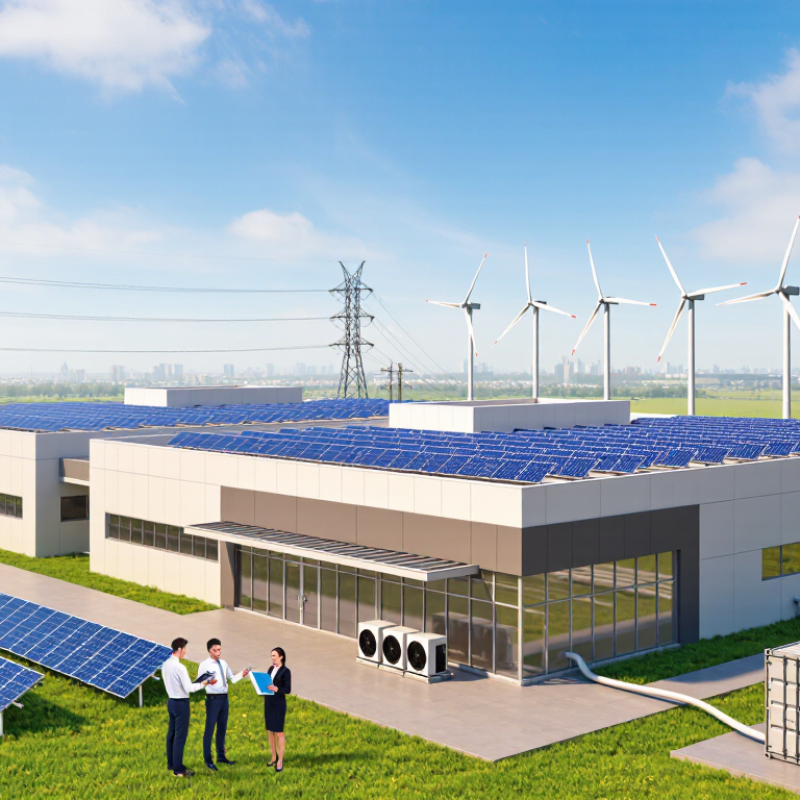
    How to Choose Renewable Energy Solutions for Your Business?

    Define Your Business’s Energy Needs and Sustainability Goals

    Choosing renewable energy for a business starts with a clear energy picture. Do not begin with panels or turbines. Begin with twelve months of utility bills, meter readings, and operating schedules. Note seasonal peaks, overnight loads, and equipment that starts simultaneously. A small warehouse may use little energy overall but face sharp refrigeration demand.

    Speak with an energy auditor or qualified engineer. They can separate baseload from avoidable waste and test practical efficiency measures. Compare measured consumption with production levels, floor area, and weather data. This prevents ambitious sustainability claims based on incomplete figures. I have seen businesses overestimate solar capacity because weekend demand was ignored. That mistake can distort budgets and system sizing.

    Your sustainability goals should be specific and measurable. Decide whether you want lower emissions, predictable costs, local generation, or stronger resilience during outages. Set a target year and define how progress will be verified. Consider roof condition, grid limits, planning rules, maintenance skills, and available capital. Renewable power may not solve every problem. Batteries can add complexity, while efficiency upgrades may deliver greater value first. Recheck the plan after one operating season. Real data may challenge the original assumptions.

    Compare Renewable Energy Technologies for Your Operating Conditions

    Choosing renewable energy for a business starts with operating conditions, not attractive headlines. In practical site assessments, electricity demand often changes by hour, season, and production cycle. Rooftop solar suits buildings with daytime loads and usable roof space. It performs poorly where shadows, dust, or weak structures reduce output. Wind requires stronger evidence. A bankable resource study should confirm wind speed, turbulence, land access, and grid capacity.

    Cost data can guide, but it cannot replace a site study. IRENA’s Renewable Power Generation Costs in 2023 reported global weighted average costs of about $0.044 per kWh for utility-scale solar and $0.033 for onshore wind. Offshore wind reached roughly $0.075 per kWh. These figures are useful benchmarks, not promises. Hydropower may provide stable generation, while biomass can support continuous output. Yet both depend heavily on geography, fuel logistics, permits, and water conditions. Storage can smooth solar and wind, but battery sizing must match peak demand and outage risks. Bigger is not always better.

    Tips: Match technology to your load profile. Measure first. Compare hourly generation, maintenance, land, interconnection, and replacement costs. Request at least three years of solar or wind data when possible. Check degradation assumptions carefully. A low tariff may hide curtailment or network charges. I would also test a less impressive option, such as efficiency upgrades before new generation. That step is often overlooked. Businesses should document assumptions and revisit them annually, because tariffs, equipment costs, and climate conditions keep changing.

    How to Choose Renewable Energy Solutions for Your Business?

    Compare Renewable Energy Technologies for Your Operating Conditions

    Capacity factor represents the average percentage of maximum possible generation delivered over a year. Higher values generally indicate more consistent energy production, while solar and wind output remains dependent on local sunlight and wind conditions. Hydropower depends on water availability, geothermal requires suitable underground resources, and biomass depends on a reliable sustainable fuel supply.

    Benchmark: approximate 2023 average capacity factors for U.S. utility-scale generation by technology, based on public energy statistics. Actual results vary by site, equipment, resource quality, maintenance, and grid operation.

    Assess Costs, Incentives, Risks, and Long-Term Value

    Choosing renewable energy for a business starts with evidence, not enthusiasm. Review twelve months of electricity bills, hourly demand, peak charges, and outage costs. IRENA reported that 81% of utility-scale renewable projects commissioned in 2023 produced power more cheaply than new fossil-fuel alternatives. However, that benchmark does not equal your delivered tariff. Roof condition, grid upgrades, financing, and local labor can change the result quickly.

    Test incentives carefully. Tax credits, grants, rebates, and accelerated depreciation may shorten payback, but eligibility rules differ by location and ownership structure. Ask for written confirmation from qualified advisers. Then model three cases: expected, weak production, and delayed connection. Include insurance, maintenance, battery replacement, curtailment, and equipment disposal. NREL’s 2024 technology data commonly assumes solar degradation near 0.5% annually. Small assumptions compound over twenty-five years. A spreadsheet can still lie.

    Long-term value includes resilience and predictable energy costs. Compare net present value, internal rate of return, and cost per avoided tonne of emissions. The International Energy Agency reported that global clean-energy investment was on track to exceed 2 trillion dollars in 2024, reflecting strong capital flows and falling technology costs. Yet cheaper equipment is not automatically better. Request independently verified production estimates, performance guarantees, and clear exit terms. I would also interview a business with a similar load profile. Real operating experience often exposes maintenance delays that forecasts overlook.

    Select Qualified Providers and Design a Practical Energy Plan

    Choosing renewable energy starts with selecting a qualified provider, not comparing flashy equipment. Experienced providers should explain system limits, maintenance needs, project risks, and expected performance in clear language. Check technical certifications, insurance coverage, safety records, customer references, and completed projects of similar size. Ask for written details about warranties, monitoring, repairs, permits, and grid connection responsibilities.

    A practical energy plan should begin with twelve months of utility bills and a basic site assessment. Review daytime demand, seasonal changes, roof condition, available land, and future expansion plans. A provider can then compare solar, wind, storage, or a hybrid approach. Set measurable targets, such as reducing peak demand by 20 percent within three years. Avoid promises based only on ideal weather. A perfect forecast is impossible. My first project estimate was too optimistic because winter production received little attention.

    Tips: Request an itemized proposal with equipment capacity, installation stages, costs, savings assumptions, and expected payback. Ask how performance will be measured after installation. Include battery replacement, cleaning, inspections, and software monitoring in the operating budget. Keep a contingency fund for site repairs or delayed approvals. Independent engineering advice may be worthwhile before signing. A strong provider will welcome careful questions and explain uncomfortable details, not hide them. Revisit the plan annually as energy prices, workplace schedules, and business goals change.

    How to Choose Renewable Energy Solutions for Your Business? - Select Qualified Providers and Design a Practical Energy Plan

    Renewable Solution Typical Capacity Factor Best-Fit Business Conditions Main Advantages Key Constraints Practical Planning Requirement
    On-site Solar PV 15%–30% Businesses with suitable roofs, parking areas, or available land and daytime electricity demand Scalable, modular, low operating requirements, and suitable for behind-the-meter consumption Intermittent generation, roof loading limits, shading, permitting, and end-of-life recycling requirements Complete a structural survey, solar-resource assessment, interval-load analysis, and grid-connection review
    Onshore Wind 30%–45% Large sites with strong, consistent wind resources and adequate distance from residences Higher annual output than many solar sites and a complementary production profile in some locations Land-use permissions, noise and visual concerns, wildlife assessment, and longer development timelines Use at least 12 months of site-specific wind measurements or validated long-term resource data
    Off-site Renewable PPA Project-dependent Businesses without sufficient on-site space or with multi-site electricity demand Can support larger energy volumes without constructing equipment at the operating site Contract complexity, volume and price risk, settlement rules, and renewable-attribute ownership issues Define contract term, delivery profile, pricing formula, curtailment risk, termination rights, and certificate ownership
    Small Hydropower 30%–60% Facilities located near reliable water flows with suitable elevation change and legal water access Potentially stable output and long equipment life when properly designed Hydrology variation, environmental permits, civil works, and higher site-development complexity Undertake hydrological, ecological, civil-engineering, and water-rights assessments before investment approval
    Geothermal Energy 70%–95% Sites with suitable geothermal resources and substantial, stable thermal or electrical demand High availability and useful baseload characteristics Resource exploration risk, drilling cost, location limits, and specialized operation requirements Require geological studies, test drilling where applicable, reinjection planning, and resource-risk insurance review
    Biogas or Sustainable Biomass 60%–85% Businesses with dependable organic residues, waste streams, or verified sustainable fuel supply Dispatchable generation and possible waste-management benefits Fuel availability, sustainability verification, emissions controls, storage, and logistics Verify feedstock volume, moisture content, origin, transport distance, sustainability criteria, and backup-fuel arrangements

    Capacity-factor ranges are indicative international ranges for commercially deployed technologies. Actual performance depends on resource quality, equipment design, maintenance, grid availability, and operating conditions.

    Provider Qualification Dimension Recommended Minimum Evidence Questions to Ask Evaluation Indicator
    Technical capability Relevant project references and qualified technical personnel Has the provider delivered projects of comparable size, technology, site conditions, and grid requirements? Comparable experience, documented design standards, and clear engineering responsibility
    Financial stability Audited financial information or credible financial guarantees Who bears the risk if the project is delayed, underperforms, or requires replacement parts? Adequate insurance, warranties, security instruments, and transparent payment terms
    Performance assurance Written output guarantees and measurement methodology How will energy yield, availability, degradation, and response times be measured? Bankable guarantees, independent metering, reporting frequency, and remedies for underperformance
    Compliance and safety Licenses, safety records, environmental permits, and compliance procedures Which permits are included, and who is responsible for regulatory approval and site safety? No unresolved compliance issues and clearly assigned legal and safety obligations
    Operations and maintenance Detailed service-level agreement and spare-parts plan What are the response times, planned maintenance intervals, and equipment replacement procedures? Defined availability target, local support capability, and lifecycle-cost transparency
    Contract transparency Itemized commercial proposal and legally reviewed contract Are escalation, indexation, curtailment, force majeure, ownership, and termination terms clearly stated? No hidden fees, balanced risk allocation, and clear ownership of energy and environmental attributes

    Practical Energy Plan and Decision Metrics

    Planning Stage Core Activity Recommended Data Decision Gate
    1. Establish the baseline Map electricity, heating, cooling, transport, and process-energy demand At least 12 months of utility bills; 15-minute or hourly data where available Approved annual consumption, peak demand, load profile, and emissions baseline
    2. Reduce avoidable demand Implement efficiency measures before sizing renewable generation Energy audits, equipment schedules, power-factor data, and operating-hour records Efficiency projects meet payback, safety, and operational requirements
    3. Screen suitable technologies Compare on-site generation, storage, off-site contracts, and grid supply Resource data, site area, grid limits, tariff structure, and permitting timeline Shortlist options that satisfy technical, financial, and regulatory constraints
    4. Compare lifecycle economics Evaluate total cost rather than installation price alone Capital cost, financing, O&M, replacement, degradation, incentives, and residual value Positive risk-adjusted business case under conservative assumptions
    5. Select and contract a provider Issue a clear request for proposal and conduct technical and legal due diligence Comparable bids, guarantees, references, insurance, permits, and contract terms Provider passes qualification thresholds and contract risks are accepted
    6. Build, commission, and verify Complete installation, grid approval, performance testing, and staff training Commissioning records, meter data, safety checks, and acceptance-test results System reaches agreed operational and safety performance
    7. Monitor and improve Review energy, cost, emissions, availability, and maintenance performance quarterly Monthly production, consumption, downtime, avoided emissions, and financial data Corrective actions are triggered when performance falls below agreed thresholds

    Suggested evaluation rule: select the solution with the strongest combination of technical fit, lifecycle cost, provider capability, resilience, regulatory compliance, and measurable emissions reduction—not simply the lowest initial price.

    Plan Installation, Performance Tracking, and Future Expansion

    How to Choose Renewable Energy Solutions for Your Business?

    A strong renewable energy plan starts with your daily operations. Record electricity use by hour, season, and production cycle. Do not rely only on annual bills. A site survey should examine roof strength, shading, drainage, cable routes, and nearby equipment. Installation plans must include safety access, maintenance space, permits, and realistic construction delays. Leave room for future wiring and equipment upgrades. Small details matter.

    Track performance from the first operating day. Set a baseline using recent energy data and expected weather conditions. Monitor generation, consumption, system availability, and unusual temperature changes. A simple dashboard can reveal gradual losses before they become expensive. Compare results monthly, not just after dramatic weather events. Ask an independent engineer to review unclear readings. Numbers need context.

    Our first expansion plan underestimated how quickly electrical demand could grow. That mistake changed our planning process. Now, we review hiring plans, new machinery, delivery schedules, and building changes before selecting system capacity. Reserve space for additional generation or storage where practical. Check whether the existing electrical infrastructure can support expansion. It may not. Revisit the plan every six or twelve months, and document every adjustment. A flexible system is more valuable than an oversized one that remains difficult to operate.