Call now: 0407 696 866
Residential solar turns sunlight on a home’s roof into usable electricity. It usually relies on photovoltaic panels, an inverter, wiring, and a connection to the utility grid. Panels absorb sunlight and create direct-current electricity. The inverter changes that power into alternating current for household appliances. On a clear afternoon, this energy might run a refrigerator, charge devices, or support an air conditioner. That is the core.
When a home produces more electricity than it uses, excess power may flow to the grid. Depending on local rules, the utility may provide credits through a net-metering or similar program. A battery can store some electricity for evening use or outages. At night, stored energy may power lights and essential appliances. However, solar output changes with weather, season, roof direction, and shade from nearby trees. Clouds matter. An experienced installer should inspect the roof, electrical panel, local sunlight conditions, and utility requirements before recommending equipment. Permits and approval are also commonly required.
Understanding residential solar helps homeowners compare system designs and installation proposals. Reliable decisions need more than advertised savings. Review equipment warranties, installer credentials, projected production, financing terms, and maintenance expectations. Actual results depend on household energy use and local conditions. Some estimates look precise. They are still estimates. A careful evaluation should explain both benefits and limitations, including replacement costs and reduced production during cloudy periods. This guide explores how each component works and what practical questions deserve attention before installation.
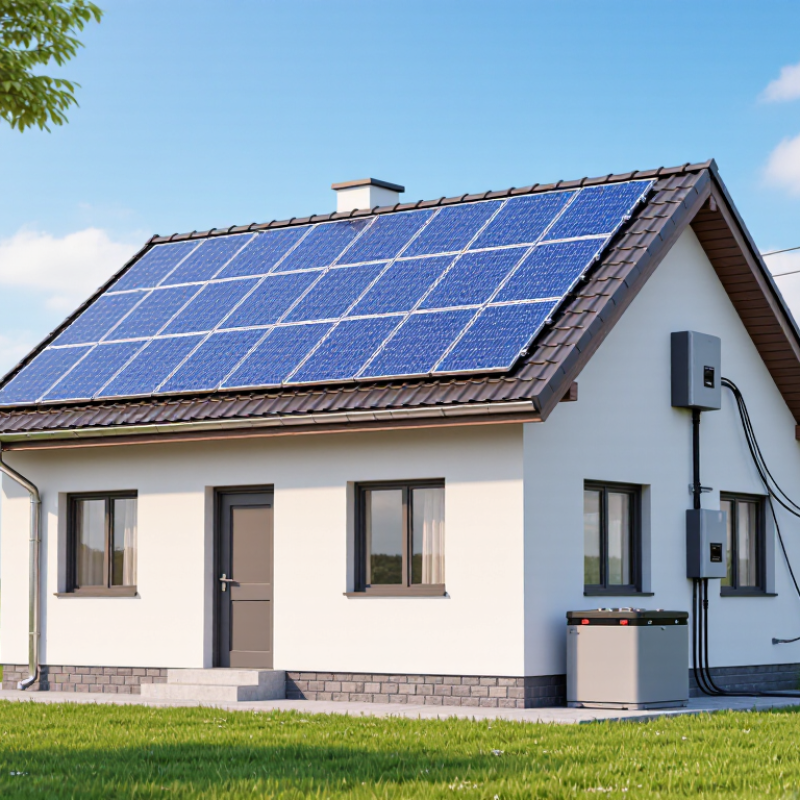
Residential solar means producing electricity at home, usually with roof-mounted photovoltaic panels. Sunlight excites the cells, creating direct current. An inverter changes it into alternating current for household appliances. The system can power lights, refrigeration, heating controls, and other daily loads. It may connect to the utility grid, batteries, or both. In practice, solar is not simply “free power.” Output changes with roof direction, shade, weather, and season.
A complete residential system includes more than panels. It may contain mounting hardware, wiring, disconnects, monitoring equipment, and protective devices. A battery stores surplus energy for evening use or outages, depending on local rules and system design. A qualified installer should inspect the roof, estimate annual production, check electrical capacity, and explain permits and grid connection. These steps matter. Poor shading estimates can weaken expected savings.
Homeowners also need to understand their energy habits. A family that runs laundry at midday may consume more solar directly. Another household may export excess electricity and buy power later. Electricity rates, maintenance, insurance, and equipment replacement affect the real cost. Panels often need little routine care, but dust, leaves, and aging components still deserve attention. I would not treat every roof as suitable; a careful site assessment can reveal expensive assumptions before installation.
Residential solar converts sunlight into electricity for lights, appliances, and home systems. Solar panels contain photovoltaic cells. When sunlight reaches these cells, electrons begin moving. This movement creates direct current, or DC electricity. The process is quiet and invisible. Cloudy weather still produces power, but output usually decreases. Shade from a chimney, tree, or nearby building can reduce production significantly.
An inverter changes DC electricity into alternating current, or AC, for household circuits. A meter tracks electricity moving between the home and the grid. Extra daytime power may flow outward, depending on local rules and the utility agreement. Some systems store electricity in batteries for evening use. Real production depends on roof direction, seasonal sunlight, panel temperature, and maintenance. A professional assessment should examine wiring, roof strength, and emergency shutoff access. Online calculators help, but they are not measurements.
Tips: Keep panels clear of leaves, heavy dirt, and lasting shade. Request a written production estimate using local weather data. Compare expected output with hourly household use, not only yearly consumption. Do not inspect live equipment yourself. A qualified electrician can test connections safely. One easily missed issue is winter shading. A roof may look bright at noon, while nearby trees block morning sunlight. That small detail can change expected production.
What Is Residential Solar and How Does It Work?
The Main Parts of a Residential Solar Power System
A residential solar system begins with photovoltaic panels fixed to a roof or ground structure. Each panel converts sunlight into direct current electricity. The racking keeps panels aligned and resists wind, while wiring carries power through safety disconnects. Real roofs are less cooperative. Shade, roof age, and nearby trees can reduce production.
The inverter changes direct current into alternating current for household appliances. It also manages grid connection and shuts down during certain faults. A bi-directional meter records electricity imported from and exported to the grid. Many systems add a battery, which stores surplus daytime energy for evening use or outages. Monitoring equipment then displays production, consumption, and alerts. That information can reveal a weak connection before it becomes expensive.
The International Energy Agency Photovoltaic Power Systems Programme reported more than 1.6 terawatts of global photovoltaic capacity by the end of 2023. The scale is impressive, but household performance still depends on local design. The National Renewable Energy Laboratory’s 2024 residential cost benchmark models an 8-kilowatt system, yet that size is not suitable for every home. My first mental model treated panels as the whole system. It was incomplete. In practice, inverter capacity, roof orientation, electrical service, and battery settings can matter just as much. A professional assessment should verify these details before installation.
A residential solar power system uses photovoltaic modules to convert sunlight into DC electricity. An inverter changes the electricity to AC power for household use, while mounting, monitoring, and optional battery storage support the system’s operation.
The chart shows typical expected service-life ranges for major residential solar components. Actual performance depends on climate, installation quality, maintenance, usage, and product specifications.
Residential solar panels convert sunlight into direct-current electricity on the roof. An inverter changes it into alternating current for household appliances. The simple picture is useful, but incomplete.
During daylight, the home uses solar power first. Extra electricity can charge a battery or flow to the utility grid through a smart meter. After sunset, the battery may power selected circuits, such as lights, refrigeration, and internet equipment. A hybrid inverter manages these transfers automatically. It also monitors household demand, battery status, and grid conditions.
The grid remains important. When solar production and battery capacity fall short, the home imports electricity as usual. When production exceeds demand, exported power may receive credit, depending on local utility rules. Those rules differ widely, so financial estimates need current, local evidence.
Outages require special attention. A standard grid-connected system usually shuts down during an outage to protect line workers. Backup operation needs approved isolation equipment and a battery system designed for that purpose. It cannot simply keep sending power into the grid.
The diagram is never the whole story. Roof shade, seasonal sunlight, battery age, and heavy appliances can change performance. A careful installer should review electrical loads, local codes, ventilation, and emergency access before sizing the system. I would not treat a battery as complete energy independence. It is better understood as a controlled buffer between the sun, the home, and the grid.
Residential solar converts sunlight into electricity through photovoltaic cells. The panels produce direct current, while an inverter converts it into usable household power. Any surplus may flow to the grid, depending on local rules and available metering arrangements. Global deployment shows its importance: the IEA PVPS Trends 2024 report estimated more than 1.6 terawatts of photovoltaic capacity worldwide by the end of 2023.
Performance depends heavily on sunlight, temperature, shading, and system design. A south-facing roof is often favorable in the Northern Hemisphere, but roof pitch and local weather still matter. Even a small chimney shadow can reduce output across several connected panels. NREL’s PVWatts documentation uses a default total system-loss assumption of about 14%, including wiring, inverter, soiling, and other losses. That figure is useful, but it is not a promise. Dusty panels, snow, and aging equipment can push losses higher.
Roof condition matters too. A strong installation begins with accurate measurements, not optimistic estimates. Household electricity use also changes by season, especially when heating or cooling loads increase. Monitoring data can reveal weak production, unusual nighttime consumption, or inverter faults. Yet predictions remain imperfect. Clouds move, trees grow, and weather records cannot describe every roof. The Fraunhofer ISE Photovoltaics Report notes continuing improvements in module efficiency, but higher efficiency cannot repair poor orientation or persistent shade. A realistic assessment should compare several years of local solar data with the home’s hourly demand. Estimates need questioning.
| Performance Dimension | Typical Residential Range or Condition | How It Affects Solar Performance | Practical Considerations |
|---|---|---|---|
| Solar Panel Efficiency | Approximately 18%–23% | Higher-efficiency panels produce more electricity from the same roof area. | Efficiency is only one factor; roof orientation, shading, temperature, and system design also affect total energy production. |
| System Capacity | Commonly 3–15 kW for homes | A larger system can generate more electricity, provided the roof area and local sunlight are sufficient. | The appropriate size depends on annual electricity use, available roof space, budget, and local utility rules. |
| Solar Irradiance | Varies by location, season, and weather | More sunlight increases the direct-current electricity produced by the panels. | Peak-sun-hour estimates are commonly used to compare solar resources, but clouds, haze, and storms reduce production. |
| Roof Orientation | South-facing is often favorable in the Northern Hemisphere | A suitable orientation increases the amount of sunlight received during productive hours. | East- and west-facing roofs can also perform well, although their daily production patterns may differ. |
| Roof Tilt | Often near the site’s latitude for annual output | A suitable tilt helps panels receive sunlight more directly over the year. | Actual roof angle, seasonal priorities, local weather, and mounting constraints should be considered. |
| Shading | Lowest possible shading is preferred | Shadows from trees, chimneys, buildings, or roof structures can reduce output and may affect multiple panels. | Shading should be evaluated throughout the day and across different seasons, not only at one observation time. |
| High Temperature | Panel output typically decreases as cell temperature rises | Many crystalline-silicon panels have a power temperature coefficient of approximately −0.3% to −0.5% per °C above the rated test temperature. | Good airflow beneath the panels can help reduce heat buildup, but hot sunny conditions can still lower instantaneous output. |
| Inverter Efficiency | Approximately 95%–99% under suitable operating conditions | The inverter converts direct current from the panels into alternating current used by household loads and the grid. | Actual efficiency varies with load level, operating temperature, system configuration, and conversion losses. |
| Overall System Losses | Often about 10%–25% in total | Wiring, inverter conversion, mismatch, soiling, temperature, shading, and downtime reduce energy delivered to the home. | A system performance ratio of roughly 75%–90% is commonly used as a broad planning range, depending on site conditions and design. |
| Soiling and Dirt | Usually a small loss, but site-dependent | Dust, pollen, bird droppings, and other deposits block sunlight and reduce panel output. | Rain may provide partial cleaning; cleaning frequency depends on rainfall, roof pitch, local dust, and panel accessibility. |
| Snow Coverage | Temporary production reduction or interruption | Snow blocks sunlight until it slides or melts away. | Panel tilt, snow depth, temperature, and roof access influence recovery time. Manual removal should be done safely and only when appropriate. |
| Battery Round-Trip Efficiency | Approximately 85%–95% | Some energy is lost when electricity is stored and later discharged. | Usable capacity, charging limits, reserve settings, temperature, and battery age also affect the energy available to the home. |
| Battery Depth of Discharge | Varies by battery chemistry and control settings | Using more of a battery’s stored energy can increase usable capacity but may influence cycle life. | Manufacturers typically specify operating limits; the usable capacity may be lower than the nameplate capacity. |
| Annual Panel Degradation | Approximately 0.3%–0.8% per year | Panel output gradually declines over time due to normal material aging and environmental exposure. | Actual degradation depends on panel construction, climate, installation quality, and operating conditions. |
| System Operating Life | Panels commonly operate for 25–30 years or longer | Long operating life allows the system to produce electricity over many years. | Inverters, batteries, wiring, mounting hardware, and roof conditions may have different service lives. |
| Grid Connection | Grid-tied, off-grid, or hybrid configuration | A grid-tied system can export surplus electricity, while a battery or backup generator may support supply during outages. | Interconnection requirements, export limits, outage operation, and compensation rules vary by location. |
| Household Electricity Demand | Varies by home size, occupants, appliances, and climate | Using electricity during solar production hours can increase direct solar consumption. | Load shifting, efficient appliances, and smart controls can reduce grid imports without increasing system size. |