
Call now: 0407 696 866
When emergency response depends on minutes, vehicle sourcing cannot rest on attractive brochures alone. This guide introduces the global supplier landscape surrounding Chenglong Emergency Vehicle and explains how serious buyers can compare it. We focus on build quality, response-body design, chassis performance, equipment integration, export support, and documented service. The aim is practical: connect procurement teams with suppliers that explain specifications clearly and support vehicles after delivery.
Experienced fleet managers usually inspect more than a finished truck. They review pump capacity, water-tank construction, electrical protection, cabin ergonomics, maintenance access, and operating conditions. A credible supplier should provide technical drawings, testing records, warranty terms, and realistic delivery timelines. References from fire departments and rescue contractors can add valuable evidence, especially when regional roads, climates, and training standards differ. Photos help, but service records speak louder.
Still, supplier comparisons are rarely perfect. Public information can be incomplete, translated unevenly, or presented without independent verification. That limitation deserves attention. Buyers should request current certifications, confirm configuration details, and compare total ownership costs rather than purchase prices alone. This overview treats reputation as evidence, not decoration. It highlights dependable practices while recognizing that one vehicle may suit an airport brigade but fail a rural rescue team. Chenglong Emergency Vehicle deserves careful evaluation within that wider context, with safety, usability, and long-term support guiding the final decision.
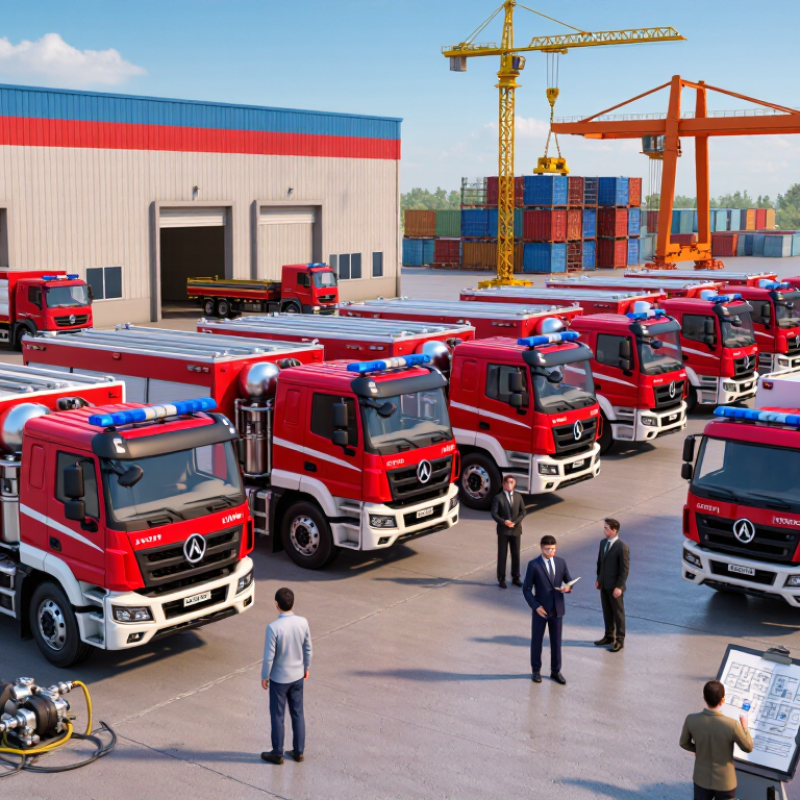
Chenglong emergency vehicles are best assessed through their product scope, not name recognition. The portfolio typically covers ambulances, rescue trucks, command vehicles, and mobile support units. Each platform serves a different field condition.
An ambulance may need a quiet treatment cabin, washable surfaces, oxygen storage, and stable access for stretchers.
A rescue truck needs stronger suspension, external compartments, lighting, and reliable power equipment.
Market demand is expanding. Grand View Research estimates the global ambulance services market reached about USD 48 billion in 2023, with continued growth expected through 2030.
The report links this expansion to aging populations, emergency-care investment, and faster response requirements.
Vehicle buyers should also examine standards, maintenance records, payload limits, and conversion quality. NFPA 1900 emphasizes safety, vehicle performance, and equipment integration for emergency response units. Compliance claims still require local verification.
Field experience shows that a large cabin is not always better. Poorly arranged drawers can delay treatment by several seconds. That matters.
Product evaluation should include road testing, door clearance, electrical redundancy, and crew movement during simulated incidents.
Supplier information often highlights specifications, but real operators may report different results. This gap deserves honest review.
Market figures also vary by research method, so procurement teams should compare report definitions before making decisions.
Top Emergency Vehicle Suppliers Worldwide?
Emergency vehicles are not one uniform product. Ambulances support patient transport, roadside stabilization, and clinical monitoring. WHO’s Global Status Report on Road Safety 2023 recorded about 1.19 million road deaths annually. That figure demands reliable suspension, clear cabin access, and secure medical storage. A basic ambulance may serve urban calls. Remote regions need longer range and stronger off-road capability. Cabin layout matters.
Fire-rescue vehicles combine water delivery, pumps, ladders, and breathing-air equipment. Some carry thermal cameras and hydraulic rescue tools. Aerial platforms help crews reach upper floors, while technical rescue units support collapsed structures and difficult terrain. Command vehicles provide radios, mapping screens, lighting, and workspace during extended incidents. Their value is less visible. Coordination can prevent duplicated dispatches.
Supplier evaluation should include payload testing, chassis durability, service coverage, and technician training. NFPA 1900, issued for emergency response apparatus, emphasizes operational and safety requirements. WHO also estimates road crashes cost many countries about 3% of gross domestic product. Faster response can reduce harm, but speed alone is not enough. Real deployments are messier than brochures. I would recheck turning radius, battery endurance, and winter performance before purchase. One overlooked detail can delay a crew by minutes.
| Emergency Vehicle Type | Primary Mission | Typical Base Configuration | Common Equipment | Typical Deployment | Key Selection Criteria |
|---|---|---|---|---|---|
| Ambulance | Provides emergency medical care and transports patients to medical facilities. | Van, light-duty truck, or medium-duty box-body vehicle with a separated patient compartment. | Patient stretcher, medical oxygen, suction unit, first-aid supplies, monitoring equipment, interior lighting, and sanitation surfaces. | Urban roads, highways, rural communities, industrial sites, and disaster areas. | Patient-care layout, payload, medical-storage capacity, ride comfort, accessibility, and infection-control design. |
| Fire Engine | Suppresses structural, vehicle, and outdoor fires while supporting initial rescue operations. | Medium- or heavy-duty truck with a crew cab, pump, water tank, and hose body. | Fire pump, water tank, hoses, ladders, nozzles, breathing-apparatus storage, thermal imaging equipment, and portable tools. | Residential areas, commercial districts, industrial zones, and road incidents. | Pump capacity, tank volume, crew seating, equipment weight, maneuverability, and local firefighting standards. |
| Water Tender or Tanker | Delivers large quantities of water to fire scenes where hydrants or water mains are limited. | Medium- or heavy-duty truck fitted with a high-capacity water tank and transfer pump. | Water tank, fill and discharge connections, transfer pump, hoses, valves, and traffic-warning equipment. | Rural districts, wildland-urban interface areas, construction sites, and remote facilities. | Water capacity, axle-load compliance, filling speed, off-road capability, stability, and water-delivery rate. |
| Rescue Truck | Performs technical rescue and extrication during traffic collisions, structural failures, and confined-space incidents. | Medium- or heavy-duty chassis with enclosed equipment compartments and a modular rescue body. | Hydraulic cutters and spreaders, lifting bags, winches, stabilization tools, saws, generators, lighting, ropes, and medical supplies. | Highways, tunnels, collapsed structures, rail corridors, and industrial facilities. | Payload margin, compartment organization, generator output, tool accessibility, stabilization capacity, and scene lighting. |
| Hazardous Materials Response Vehicle | Identifies, contains, and supports cleanup of chemical, biological, radiological, or fuel-related hazards. | Enclosed medium- or heavy-duty body with segregated clean and contaminated equipment zones. | Detection instruments, protective suits, respirators, spill-control materials, decontamination equipment, sampling tools, and sealed storage. | Industrial parks, laboratories, transport routes, ports, warehouses, and fuel facilities. | Compartment separation, chemical resistance, ventilation, decontamination capacity, payload, and regulatory compliance. |
| Command and Communications Vehicle | Provides an operational headquarters for incident management, dispatch coordination, and interagency communication. | Bus, van, or medium-duty truck with an enclosed office and communications compartment. | Workstations, radios, satellite or cellular communications, mapping displays, power systems, recording equipment, and meeting space. | Large fires, natural disasters, public events, search operations, and prolonged incidents. | Communications interoperability, power autonomy, seating, climate control, connectivity, and rapid setup time. |
| Search and Rescue Vehicle | Supports locating, reaching, and evacuating people during floods, earthquakes, storms, and wilderness incidents. | All-wheel-drive truck or utility vehicle with elevated ground clearance and specialized storage. | Rescue ropes, flotation devices, portable lighting, medical kits, navigation equipment, cutting tools, radios, and recovery gear. | Flood zones, mountainous terrain, disaster sites, forests, and remote communities. | Traction, ground clearance, water-fording capability, payload, equipment access, and crew safety features. |
| Mobile Workshop and Support Vehicle | Maintains emergency equipment and provides logistics, power, repair, or shelter support at extended incidents. | Medium- or heavy-duty truck with a box body, service body, or deployable support module. | Tools, spare parts, compressor, generator, welding equipment, workbench, lighting, fuel systems, and storage cabinets. | Disaster recovery areas, remote operations, infrastructure repair sites, and major public events. | Payload, power output, workshop layout, weather protection, service access, fuel efficiency, and operating duration. |
| Airport Crash Tender | Rapidly suppresses aircraft fires and supports rescue operations on airport runways and aprons. | High-capacity all-wheel-drive vehicle with a large water tank, foam system, and roof-mounted monitor. | Water and foam tanks, high-flow pump, roof or bumper turrets, dry-chemical system, thermal protection, and aviation rescue tools. | Airports, aircraft maintenance areas, military airfields, and aviation fuel zones. | Acceleration, fire-agent capacity, discharge rate, crash-rescue access, thermal protection, and airport response standards. |
Note: Configurations and equipment vary according to local regulations, emergency-service requirements, terrain, payload limits, and the selected vehicle body or chassis. The categories above describe common industry applications and are not tied to any specific company or brand.
Leading emergency vehicle suppliers vary by region, road conditions, and public-service requirements. In East Asia, experienced manufacturers often provide modular rescue trucks, medical units, and firefighting vehicles. Their strengths include compact layouts, reliable diesel platforms, and flexible body designs. Workshop inspections should check weld quality, wiring protection, pump access, and cabin ergonomics. Small details matter.
European suppliers commonly emphasize low-emission systems, crash protection, and precise equipment integration. Many offer vehicles for urban rescue teams, industrial response units, and airport operations. Buyers should review service coverage, spare-part availability, and compliance documentation before ordering. A polished brochure is not enough. Demonstration testing reveals more.
In North America, suppliers often focus on large-capacity rescue platforms, command vehicles, and heavy-duty response trucks. Regional distributors may provide stronger maintenance support than distant factories. In the Middle East and Africa, suppliers need to address heat, dust, long travel distances, and limited workshop infrastructure. South American buyers may prioritize adaptable chassis, local servicing, and affordable lifecycle costs. These needs can conflict. A highly equipped vehicle may become difficult to maintain. Supplier credibility should come from verified projects, trained technicians, clear warranties, and transparent testing records. Buyers should also speak with actual fleet operators, because real deployment experience sometimes exposes weaknesses that specifications overlook.
Choosing an emergency vehicle supplier requires more than comparing listed prices. During fleet evaluations, I inspect body welding, door alignment, storage access, and electrical protection. Small defects often become expensive after months of vibration, dust, and repeated cleaning. Ask suppliers for build drawings, material specifications, and documented load limits. Photos are useful, but physical inspection is more reliable.
Certification claims deserve careful checking. Request current certificates, issuing-body details, and matching vehicle identification numbers. Confirm whether testing covers the complete vehicle or only selected equipment. Useful documents may include quality-management certification, electrical safety reports, roadworthiness records, and fire-resistant material testing. Requirements vary by destination, so an independent compliance review can prevent costly modifications. I once trusted a certificate without checking its scope. That was a poor assumption.
Service quality becomes visible after delivery. Evaluate response times, spare-parts availability, technician training, and warranty exclusions. Ask for a sample maintenance schedule and an emergency repair procedure. A dependable supplier should explain battery access, lighting replacement, pump servicing, and software updates in practical language. Request references from fleets with similar operating hours and climate conditions. Speak with their mechanics, not only sales staff. A polished presentation can hide weak support. Even a strong supplier may have delays, so record critical parts, escalation contacts, and expected repair times in the contract. Start with evidence.
This neutral 100-point evaluation model focuses on verifiable supplier capabilities rather than company or brand rankings. Buyers should confirm certificates, product documentation, service coverage, and delivery performance through current records and contracts.
Evaluation focus: Product compliance and safety receive the highest weighting, followed by manufacturing quality, customization capability, after-sales support, delivery reliability, and export documentation.
Global demand for Chenglong emergency vehicles is shifting from simple volume growth to smarter fleet planning. Buyers now compare uptime, payload balance, cabin safety, and service access before signing contracts. Urban fleets favor compact rescue units for narrow streets and dense traffic. Rural agencies often require longer-range vehicles, larger water capacity, and stronger suspension.
Supply chains are also becoming more regional. Import delays, shipping costs, and changing component availability can affect delivery schedules. Reliable suppliers are building local parts networks and training technicians near major operating areas. This reduces downtime after deployment. Digital fleet systems are gaining attention too. They can track maintenance intervals, fuel use, tire pressure, and vehicle location.
In procurement reviews, technical documents matter as much as vehicle demonstrations. Buyers should check emergency lighting standards, braking performance, corrosion protection, and warranty response times. A low purchase price may hide expensive maintenance later. Not every connected feature creates real value. Sometimes, a simple dashboard is more dependable than a complex one.
No forecast is flawless. Weather events, battery supply, and public budgets can change demand quickly. Suppliers that communicate delays honestly usually earn stronger trust. Their strongest advantage may be practical support, not polished marketing.