
Call now: 0407 696 866
Choosing an Electric Scooter Manufacturer is not simply a search for the lowest factory price. Global buyers must examine engineering quality, battery safety, production consistency, and after-sales support. A scooter may look polished in photographs yet reveal weak welds, poor cable protection, or unstable braking during real testing.
Horace Dediu, a respected micromobility analyst, describes the sector as “the movement of people and goods in vehicles weighing less than 500 kilograms.” His observation places electric scooters within a broader transportation shift, not a short-lived gadget trend. That distinction matters. Manufacturers now serve commuters, delivery fleets, rental operators, and private riders with different performance expectations.
This guide evaluates ten leading manufacturers through practical buying criteria. These include factory experience, motor and battery systems, quality-control procedures, customization capability, warranty responsiveness, and export readiness. We also consider riding range under realistic conditions, where rider weight, hills, temperature, and tire pressure can reduce advertised figures.
Numbers can mislead.
A reliable supplier should provide clear technical documents, traceable battery information, test records, and consistent communication. Independent certifications and regional compliance support are also valuable, but paperwork alone cannot replace physical inspection or sample testing. That is where many purchasing decisions become uncomfortable. Even established brands may have uneven models, delayed parts, or unclear limits on warranty coverage.
The manufacturers below are not ranked by popularity alone. They are compared from a global buyer’s perspective, balancing capability, reliability, product fit, and long-term commercial risk. The strongest choice may not be the cheapest or most famous. It should be the partner that performs consistently after the first shipment arrives.
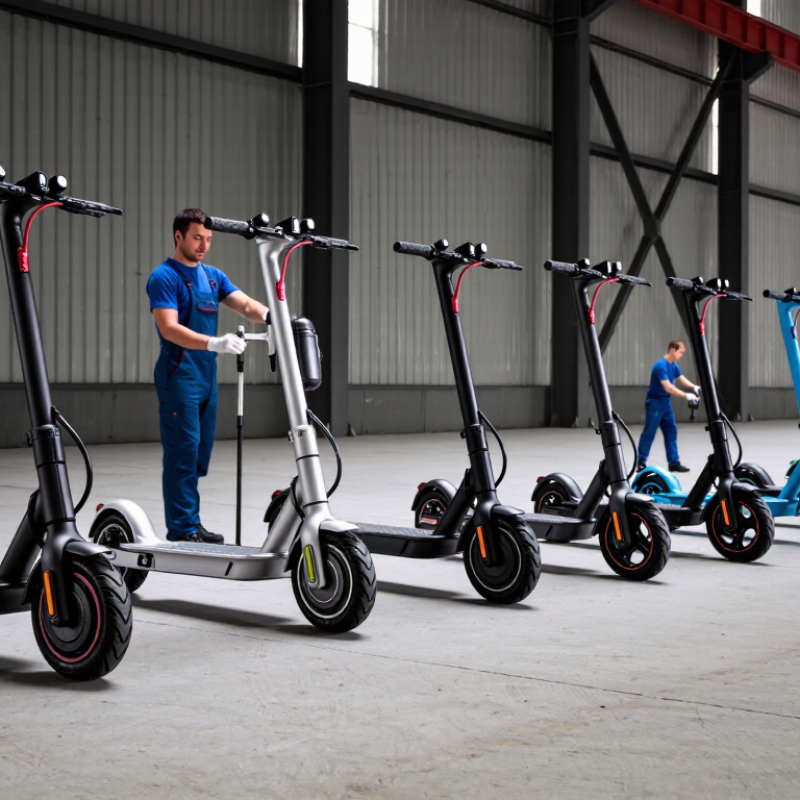
The global electric scooter manufacturing landscape is shaped by more than production volume. Leading manufacturers combine engineering, battery integration, quality control, and export experience. In factory assessments, small details often reveal capability: even welds, protected cable routes, and consistent frame alignment.
A reliable supplier should document battery-cell sourcing, thermal testing, charger compatibility, and water-resistance results.
Clear records matter.
Buyers also need evidence of brake performance, lighting visibility, folding-cycle durability, and software safeguards. Local service capacity is equally important, because a damaged controller can stop an entire delivery fleet. Spare-part availability, technical manuals, and stable lead times separate serious manufacturers from short-term assemblers.
The top ten global contenders may differ in design and scale, yet their strongest systems usually share disciplined testing routines. However, no factory is perfect. A polished sample can hide production variation, and impressive specifications may overlook repair costs. Independent inspections, pilot orders, and random unit testing reduce that risk. I would also question unusually low prices, especially when battery protection or after-sales support is unclear. The landscape keeps changing as manufacturers improve range, reduce weight, and adapt models for different road conditions. Their real strength appears in repeated shipments, not showroom promises.
Ranking the top electric scooter manufacturers requires more than comparing advertised speed or range. A credible assessment begins with product safety, engineering quality, and documented production controls. I examine frame welds, battery protection, braking response, water resistance, and charger performance. Real roads reveal weaknesses quickly. Laboratory data still matters, but it cannot replace practical testing on uneven streets, slopes, and frequent stop-and-go routes.
Manufacturers receive stronger scores when they provide clear technical documents, traceable components, and consistent quality checks. Independent safety testing and compliance with destination-market requirements also carry significant weight. Warranty terms must be specific, not vague promises. I review repair procedures, spare-part availability, response times, and dealer training. A reliable supplier should explain failures honestly and offer workable solutions. That behavior often matters more than polished marketing.
Pricing is measured against durability, not against the cheapest quotation. A low purchase price can become expensive after repeated tire, brake, or battery replacements. I also consider production capacity, shipment consistency, packaging protection, and communication during specification changes. These details affect global buyers directly. However, the ranking cannot eliminate every uncertainty. Factory visits may show a prepared production line, while long-term performance remains untested. Regional roads, rider weight, climate, and maintenance habits can change results. Therefore, the final evaluation should remain evidence-based, transparent, and open to revision when new field data appears.
| No. | Ranking Criterion | Weight | Objective Measurement | Required Evidence | Scoring Guidance |
|---|---|---|---|---|---|
| 1 | Product Safety Compliance | 18% | Verification of applicable electrical, mechanical, charging and consumer-product safety requirements in the target markets. | Test reports Certificates Declaration of conformity Use current documents issued by accredited laboratories or recognized certification bodies. | Full points only when documentation is valid, product-specific and traceable to the tested model. |
| 2 | Battery and Charger Safety | 14% | Battery protection design, charger compatibility, thermal management, transport documentation and safety testing. | Battery test records Charger specifications UN 38.3 documentation | Higher scores require documented protection against overcharge, over-discharge, short circuit and abnormal temperature conditions. |
| 3 | Reliability and Quality Control | 12% | Failure rate, warranty-return rate, production consistency, incoming inspection and final quality-control procedures. | Warranty statistics Factory audit Quality records | Score only independently verifiable data covering at least the most recent 12-month period. |
| 4 | International Market Coverage | 12% | Number of markets served, local regulatory readiness, distribution capability and availability of region-specific product versions. | Authorized distributor list Regional manuals Compliance files | Give higher scores to manufacturers with documented support across multiple major sales regions. |
| 5 | After-Sales Service and Spare Parts | 12% | Service-center coverage, spare-parts availability, repair procedures, response times and technical-support accessibility. | Service network Parts catalog Support policy | Higher scores require long-term parts support and clearly defined procedures for warranty and non-warranty repairs. |
| 6 | Range and Performance Transparency | 10% | Accuracy and completeness of published range, speed, payload, gradeability, charging time and operating-condition data. | Technical datasheets Independent tests User manuals | Reward manufacturers that distinguish laboratory results from real-world performance and state test conditions clearly. |
| 7 | Weather Resistance and Durability | 8% | Protection against water and dust, corrosion resistance, frame durability and suitability for the declared operating environment. | Ingress-protection test Durability testing Material specifications | Do not treat an IP rating as proof that a scooter is suitable for immersion or unrestricted heavy rain. |
| 8 | Warranty and Consumer Protection | 7% | Warranty duration, covered components, claim process, exclusions, repair-or-replacement policy and regional legal compliance. | Written warranty Terms and conditions Claim procedure | Higher scores require clear, accessible and regionally applicable warranty terms without vague exclusions. |
| 9 | Sustainability and Battery End-of-Life | 5% | Repairability, replaceable components, packaging practices, recycling arrangements and responsible battery collection. | Environmental policy Recycling program Product design data | Give credit for measurable programs and documented procedures rather than general environmental claims. |
| 10 | Total Cost of Ownership | 2% | Purchase price, energy consumption, maintenance frequency, consumable-part costs and expected service expenditure. | Retail pricing Parts prices Maintenance schedule | Compare products within the same performance class and market, using prices recorded during the same review period. |
| Total Ranking Weight | 100% | Rank manufacturers by the weighted score after evidence verification and regional suitability checks. | |||
Comparing the Top 10 Electric Scooter Manufacturers requires more than checking claimed speed. The strongest manufacturers usually balance battery safety, range accuracy, spare-part access, and warranty response. Grand View Research estimates that the global electric scooter market will continue expanding at a strong compound annual growth rate through 2030. However, market reports use different definitions, so rankings should be treated carefully.
For a practical comparison, assess ten manufacturers across five measurable areas: tested range, charging time, motor efficiency, frame durability, and after-sales service. Independent laboratory testing matters because real range can fall sharply in cold weather, steep streets, or heavy rain. The International Energy Agency reports that electric two- and three-wheelers remain among the most widely adopted electric road vehicles. This supports demand, but it does not prove every model is dependable. Some manufacturers publish impressive laboratory figures. Daily riders may see less.
Tips: Request battery certification, clear warranty terms, and replacement-part prices before ordering. Check whether the charger supports your local voltage. A three-kilogram weight difference also matters when carrying a scooter upstairs. Look for water-resistance testing, not vague “all-weather” language. Personally, I would value stable braking and repair access above an extra five kilometers of advertised range. That preference is subjective, but it reflects real commuting conditions. Compare independent test results with manufacturer data, and record both before making a purchasing decision.
Top 10 Electric Scooter Manufacturers for Global Buyers
A serious comparison should examine more than advertised speed. Product range matters: commuter scooters, cargo models, seated versions, and compact units serve different streets. The IEA’s Global EV Outlook 2024 reports that electric two- and three-wheelers exceeded half of all sales in China in 2023. This signals strong demand, but conditions differ widely across markets. A manufacturer with ten models may still offer weak regional support.
Technology separates capable suppliers from attractive catalogs. Buyers should inspect battery management systems, cell traceability, water resistance, braking design, and software update policies. BloombergNEF reported average lithium-ion battery pack prices of 115 US dollars per kWh in 2024. Lower battery costs may improve value, yet they do not guarantee safer construction or longer service life. Real range also changes with rider weight, hills, temperature, and tire pressure. I once trusted a brochure figure too quickly; that was a poor comparison method.
Tips: Request independent range testing and spare-parts availability before ordering. Check whether the charging system suits local voltage standards. Review warranty terms, repair response times, and fleet-management tools for commercial use. Market reach should include trained service partners, not only shipping destinations. The strongest manufacturers usually publish technical specifications clearly, but transparency is still uneven. That deserves more attention. According to the World Bank’s 2023 Global Electric Mobility report, supportive charging and policy infrastructure strongly influence adoption, so local usability should shape any top-ten ranking.
This comparison uses three buyer-focused indicators: product range, technology coverage, and international market reach. Scores are normalized to a 100-point scale from publicly available product specifications, safety certifications, regional distribution, and after-sales coverage. Company names are intentionally omitted.
Choosing among the top ten electric scooter manufacturers requires more than comparing advertised speed. Quality appears in small details: tight folding joints, sealed connectors, balanced braking, and tires that remain stable on uneven pavement. A careful buyer should inspect frame welds, battery protection, charger design, and spare-part availability. These checks reveal more than polished product photos.
Safety deserves documented evidence, not confident language. Look for tested braking systems, clear lighting, reliable reflectors, and battery certifications accepted in the target market. A useful evaluation also considers rider weight, weather limits, hill performance, and realistic range. Range claims often use ideal conditions. Real streets are less forgiving. Test reports, manuals, and independent service records provide stronger evidence than promotional promises.
Support can decide whether a good scooter becomes a costly mistake. Compare warranty length, response times, repair locations, software updates, and replacement component prices. Ask whether the manufacturer supplies batteries, tires, controllers, and chargers several years later. My first shortlist focused too heavily on purchase price. That judgment was incomplete. A cheaper scooter may lose value quickly if repairs require overseas shipping or unfamiliar tools. Buyer value means dependable performance, transparent support, and predictable ownership costs, not merely a low checkout total. Hesitation is reasonable when a seller avoids technical questions.