• Cleveland QLD 4163 Find us on Facebook

  • What Are the Best Home Solar Systems in China?

    Choosing among the best home solar systems in China requires more than comparing panel prices. A suitable system must match your roof, electricity use, local climate, and future plans. A small apartment balcony system differs greatly from a rural home with a tiled roof and higher daytime demand.

    China has a deep solar manufacturing base, but product quality still varies. This guide will examine panels, inverters, batteries, mounting structures, warranties, and installer support. It will also consider common household conditions, from humid coastal cities to dusty northern regions. A reliable system should use certified equipment, clear safety protections, and installation practices that follow relevant Chinese and international standards.

    Real performance matters.

    A 6-kilowatt system may produce different results in Shanghai, Chengdu, and Inner Mongolia. Shade from water tanks, nearby buildings, or winter haze can reduce output noticeably. Battery storage also deserves careful attention, especially when evening electricity costs are high or outages occur. Capacity alone does not prove value; usable energy, cycle life, thermal management, and warranty terms matter more.

    No comparison is perfect. Prices change, local incentives differ, and installer quality can be difficult to judge before work begins. I may overlook a strong regional provider, particularly where public technical data is limited. Therefore, the discussion will focus on practical evidence, transparent specifications, and ownership experience rather than marketing claims. Readers should verify grid-connection rules and obtain several written quotations before making a purchase.
    What Are the Best Home Solar Systems in China?

    Solar Energy Potential and Home System Types in China

    China has strong solar resources, but output varies sharply by region.

    The World Bank’s Global Solar Atlas estimates photovoltaic yields above 1,000 kWh per installed kilowatt annually across much of China. Northern and western areas can exceed 1,400 kWh. Coastal cities usually receive less sunlight, while haze and humid weather reduce winter production. Location changes everything.

    For many households, a grid-connected rooftop system is the simplest option. It uses solar power during the day and sends surplus electricity to the grid, subject to local connection rules.

    A hybrid system adds batteries for evening cooking, cooling, or short outages. Off-grid systems suit remote homes, but they require larger batteries and careful backup planning.

    The International Energy Agency Photovoltaic Power Systems Programme reported continued rapid growth in China’s distributed photovoltaic market, reflecting rising interest in smaller, locally used systems.

    System sizing should follow measured electricity demand, roof direction, shading, and seasonal use. The National Energy Administration reported that China’s total installed solar capacity reached about 887 gigawatts by the end of 2024, showing the country’s manufacturing and deployment scale.

    That figure does not guarantee equal household performance. A shaded roof can underperform a smaller, well-positioned roof.

    Batteries add complexity. Their replacement cost, temperature control, and recycling arrangements deserve attention.

    A perfect forecast is impossible, so installers should explain assumptions clearly and provide production estimates for cloudy months.

    Key Components of a Chinese Residential Solar System

    A Chinese residential solar system begins with photovoltaic modules, which convert sunlight into electricity. Roof direction, shading, dust, and summer heat all affect their output. A south-facing roof often performs well, but east-west layouts can spread generation across the day. Mounting rails must match the roof material and local wind conditions. On coastal properties, corrosion-resistant hardware deserves extra attention. Small details matter.

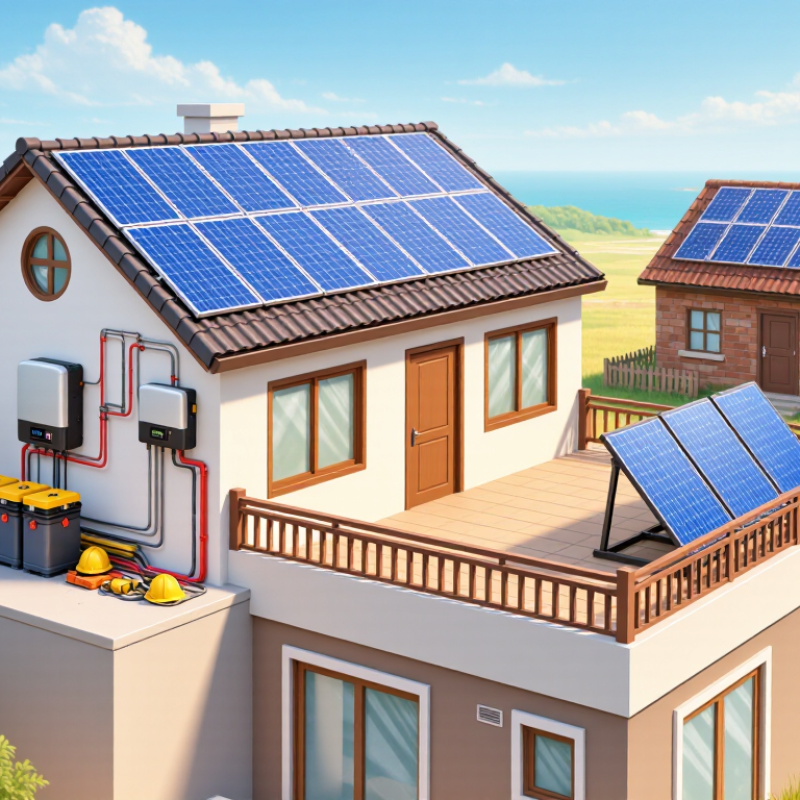
    The inverter is the system’s control center. It changes direct current into household alternating current. A hybrid inverter can also manage battery charging and backup loads. Batteries store unused daytime electricity for evening cooking, cooling, or lighting. Usable capacity matters more than the advertised capacity. Many households oversize batteries before measuring their real consumption. That choice can increase cost without improving daily comfort. A monitoring meter or phone application helps track production, battery levels, and unusual losses, although software readings are not always perfect.

    Protection equipment is equally important. DC isolators, fuses, surge protection, grounding, and correctly rated cables reduce electrical risks. The home distribution board needs suitable connections for solar and backup circuits. A bidirectional meter records electricity imported from and exported to the grid. Installation should follow current Chinese electrical requirements and local grid procedures. I would ask the installer for load calculations, roof drawings, warranty terms, and maintenance plans. The cheapest quotation may omit cable upgrades or weather sealing. That omission often appears after the first heavy rain.

    How to Compare Solar Panel Efficiency, Durability, and Cost

    Choosing a home solar system in China starts with the roof, not the sales brochure. In my site assessments, shading from water tanks, walls, and nearby trees often reduces output more than small efficiency differences. Panel efficiency shows how much electricity a panel produces from a fixed roof area. A high-efficiency panel helps on compact roofs, yet it may cost more per watt. Ask for measured performance data, temperature coefficients, and test conditions. Numbers can look cleaner than reality.

    Durability deserves a closer inspection. Check resistance to humidity, salt mist, wind, hail, and repeated temperature changes. Coastal homes need stronger protection against corrosion. Rural roofs may face dust, bird droppings, and difficult cleaning access. Look for independent certification and a clear product warranty. More importantly, examine the installer’s workmanship warranty. Loose connectors and poor sealing can damage an otherwise excellent system. I have seen modest panels outperform premium specifications when installation was careful.

    Cost should include panels, inverter, mounting hardware, labor, permits, monitoring, maintenance, and battery replacement. Compare total cost over the system’s expected life, not only the purchase invoice. Calculate annual kilowatt-hours using local sunlight and your household’s daytime demand. A battery may improve evening use, but it can lengthen payback and add future replacement risk. Request several itemized quotations. Leave room for uncertainty, because weather, electricity tariffs, and actual consumption rarely match the first spreadsheet. One overlooked detail: roof repairs before installation.

    What Are the Best Home Solar Systems in China?

    Comparison of common residential solar technologies by module efficiency, estimated 25-year retained output, and indicative installed system cost.

    Higher efficiency produces more electricity from limited roof space. Retained output represents the approximate percentage of initial power expected after 25 years, based on typical degradation ranges. Installed costs are indicative Chinese residential system benchmarks in CNY per watt and vary with roof structure, inverter selection, storage, labor, and project size.

    Installation Rules, Grid Connection, and Energy Storage Options

    China’s best home solar systems begin with local installation rules, not panel ratings.

    A certified installer should check roof loading, fire access, shading, and cable routes. Keep it simple. The National Energy Administration reported 277.17 GW of new solar capacity in 2024, showing rapid market growth but uneven local grid capacity.

    Before installation, homeowners usually submit technical documents to the local distribution company. These may include property approval, a single-line diagram, inverter certificates, and protection settings.

    Grid connection requires anti-islanding protection, bidirectional metering, and an approved export arrangement. Some areas limit surplus electricity during busy hours.

    Grid approval matters. Rules can differ between provinces, and online advice is often incomplete.

    Energy storage should match evening demand, not rooftop size alone.

    A 5 kW system with a 10 kWh battery may cover lighting, refrigeration, and moderate evening use. Electric heating can change that calculation completely. The NEA reported more than 73 GW of new-type energy storage capacity in China by the end of 2024.

    Still, batteries add cost, weight, ventilation needs, and replacement risk. A professional design should compare battery cycling, outage requirements, and electricity tariffs. I would not promise full backup without checking winter production and household peaks. Mistakes happen there.

    Sources: National Energy Administration, 2024 National Electricity Industry Statistics; NEA, New-Type Energy Storage Development Updates, 2025.

    Choosing the Best Home Solar System for Different Household Needs

    What Are the Best Home Solar Systems in China?

    Choosing the best home solar system depends on your household’s daily routine, roof, and electricity use. A small apartment may need a compact grid-connected system for daytime appliances. A larger family home may benefit from panels, a battery, and smart energy monitoring. Homes with frequent power interruptions should examine backup capacity carefully. A battery sized only for lights will not run air conditioning for long.

    Start with your electricity bills from different seasons. Look for evening demand, not only monthly totals. A qualified installer should inspect roof direction, shading, wiring, and structural strength. In northern areas, winter sunlight and snow deserve attention. In southern areas, heavy rain, humidity, and heat can affect equipment placement. Ask for clear calculations, safety certificates, maintenance terms, and realistic output estimates. Local grid connection rules also matter.

    No system is perfect. A larger battery sounds attractive, but it increases cost and may sit unused. A cheaper installation can become expensive if monitoring or repairs are excluded. I would compare at least three written proposals and check the installer’s completed projects. Ask how performance is tested after installation. Do not accept impressive annual figures without assumptions. Your household may change, too. New appliances, electric vehicles, or remote work can quickly alter energy demand. Leave some design flexibility. Good planning is practical, but it still needs honest revision.