Call now: 0407 696 866
China Top Green Power Suppliers for Global Buyers? This question deserves evidence, not a simple ranking. The global green power market is expanding rapidly, but supplier quality remains uneven. The International Energy Agency’s Renewables 2024 report recorded approximately 585 gigawatts of new renewable capacity worldwide in 2024. China contributed nearly 60% of that growth, supported by large solar, wind, battery, and inverter manufacturing bases.
The scale is impressive. It is not the whole story. Ember’s Global Electricity Review 2024 reported that renewables generated 30% of global electricity in 2023. Chinese suppliers are now serving utility projects, commercial rooftops, and off-grid systems across Asia, Europe, Africa, and Latin America. Buyers still need to examine factory capacity, product warranties, certification records, shipping performance, and after-sales support. A low quotation may hide longer testing procedures, replacement delays, or unclear component traceability.
Fatih Birol, Executive Director of the International Energy Agency, stated, “The world is entering a new energy era of lower fossil fuel demand, and clean energy technologies are driving the transformation.” His observation explains the opportunity, but it also raises a practical concern: growth must be measured against reliability. This guide will assess leading Chinese green power suppliers through technical capability, manufacturing experience, financial stability, export reach, and documented project performance. Product labels alone are insufficient. A solar module may look competitive under bright showroom lights, while real performance depends on heat, dust, grid conditions, and maintenance. That distinction matters. And it is often overlooked.
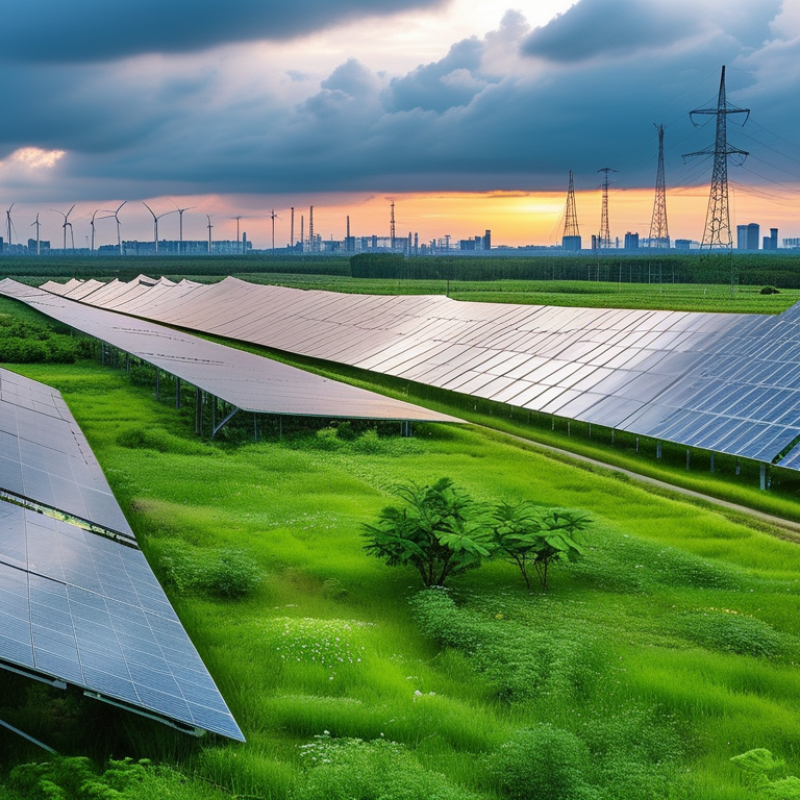
Green power suppliers in China are not limited to renewable generators. The term covers wind and solar developers, hydropower operators, electricity retailers, trading agencies, and service firms managing certificates and consumption data. Their common function is linking renewable electricity with verified buyers through physical delivery, market contracts, or environmental attributes.
The scale is substantial. According to China’s National Energy Administration, renewable energy capacity reached about 1.89 billion kilowatts by the end of 2024, representing 56.7% of national installed capacity. Solar capacity approached 887 gigawatts, while wind power exceeded 520 gigawatts. The International Energy Agency also reported that China contributed nearly 60% of global renewable capacity additions in 2023. These figures show supply potential, but not automatic access to traceable green electricity.
Verification matters.
A credible supplier should explain its generation assets, delivery region, settlement method, certificate ownership, and data-audit process. China’s Green Electricity Certificate framework is increasingly important for proving renewable attributes, while power trading records help distinguish delivered electricity from certificate-only claims. The China Electricity Council’s market reports also show expanding green power trading, although transaction coverage and regional rules remain uneven. Buyers should therefore request hourly or monthly matching details, not only annual percentages. A supplier may present a clean portfolio, yet the evidence can remain incomplete. That weakness deserves careful review.
China’s renewable energy market has shifted from policy-led growth toward a large, competitive power system. Solar and wind provide the strongest expansion, supported by lower equipment costs and extensive manufacturing capacity. Large solar farms operate across northern provinces, while onshore and offshore wind projects use strong inland and coastal resources. Hydropower still matters. It remains especially important in southwestern regions, although ecological and community concerns can limit new projects. Biomass supplies a smaller share through agricultural residues and municipal waste.
For global buyers, supplier evaluation should go beyond the lowest quoted price. Check project ownership, operating history, grid connection, delivery schedules, and renewable certificate procedures. Power purchase agreements can improve volume planning, but cross-border regulations and local market rules may complicate settlement. Battery storage is increasingly valuable because solar generation often peaks before evening demand. Transmission capacity and demand response also influence real delivery.
In practical procurement, forecasts are never perfect. Cloud cover, wind changes, curtailment, and transmission limits can reduce expected output. A reliable supplier should explain these risks clearly and provide records from operating projects. Buyers should also review lifecycle emissions, land use, equipment traceability, maintenance capacity, and worker safety practices. Price alone is a weak green-power test. That point is easy to overlook.
Choosing green power suppliers in China requires more than comparing prices. Global buyers should examine generation sources, project locations, and delivery methods. Solar, wind, and hydro projects may have different environmental profiles. Ask whether certificates match actual electricity production. Check the issuing authority, tracking system, and retirement records. A clear paper trail matters.
Reliability deserves equal attention. Review operating history, maintenance procedures, grid connections, and backup arrangements. Request independent audits and recent production data. Suppliers should explain emissions calculations in plain language. Contract terms must define delivery periods, certificate ownership, cancellation rules, and reporting duties. Local experience helps, but it does not replace evidence. Some documents may appear complete while leaving important questions unanswered. That is worth challenging.
Tips: Compare at least three suppliers using the same checklist. Visit a project when practical, or request timestamped photos and inspection reports. Confirm whether the project existed before your purchase. Ask about additionality, because not every renewable certificate supports new capacity. Test customer service with detailed questions before signing. Keep records for internal audits and public claims. A careful buyer should also review changing energy regulations in each destination market. Independent legal and technical advice can prevent costly assumptions. Mistakes happen, especially when renewable claims rely on unfamiliar accounting rules. Recognizing that risk is part of responsible procurement.
China Top Green Power Suppliers for Global Buyers?
For global buyers, supplier categories matter more than a simple factory ranking. Solar equipment suppliers often provide modules, inverters, mounting systems, and monitoring tools. Buyers should review conversion efficiency, temperature performance, product traceability, and warranty terms. A module may look impressive on paper. Field performance can tell a different story.
Wind power suppliers usually focus on turbines, blades, generators, and control systems. Their experience with local wind conditions is essential. Buyers should request noise data, maintenance records, spare-parts plans, and grid-connection evidence. Hydropower equipment suppliers serve a narrower market, but their turbines and control systems require careful engineering. Project conditions can change the final design.
Battery energy storage suppliers offer cells, battery cabinets, energy management systems, and safety controls. Independent testing, thermal management, and cycle-life data deserve close attention. Engineering, procurement, and construction suppliers can connect several categories into one working project. However, one contractor may not excel in every technical area. That weakness should be examined openly.
Reliable sourcing involves factory audits, sample testing, shipment inspections, and clear after-sales responsibilities. Buyers can also check certifications, insurance coverage, financial stability, and references from similar climates. Green electricity claims require evidence, not attractive wording. Some documentation may be incomplete or difficult to compare. That is normal, but ignoring the gaps creates avoidable risk. Procurement is rarely tidy. Experienced buyers leave room for technical revisions, delivery delays, and lessons learned after installation.
| Supplier Category | Global Renewable Capacity at End-2023 | 2023 Capacity Additions | Typical Exported Products | Best-Fit Buyer Applications | Key Procurement Criteria | Indicative Project Readiness |
|---|---|---|---|---|---|---|
| Solar Photovoltaic Equipment Suppliers | 1,419 GW | Approximately 346 GW | PV modules, cells, inverters, mounting systems, cables, monitoring equipment and complete solar-power packages | Utility-scale solar farms, commercial and industrial rooftops, distributed generation and rural electrification | Power-conversion efficiency, degradation rate, fire safety, climate durability, warranty terms, traceability and conformity with applicable IEC standards | Short to medium Often suitable for phased procurement and rapid installation where grid access is available |
| Wind Power Equipment Suppliers | 1,017 GW | Approximately 117 GW | Onshore wind turbines, offshore turbine systems, blades, towers, generators, converters and control systems | Large-scale onshore projects, offshore wind farms, industrial power supply and hybrid renewable-energy parks | Wind-resource compatibility, rated capacity, availability, transport dimensions, foundation requirements, service support and local permitting | Medium to long Usually requires resource assessment, transport planning, civil works and grid studies |
| Hydropower Equipment Suppliers | 1,268 GW | Approximately 7 GW | Hydraulic turbines, generators, governors, control panels, gates, hydro-mechanical equipment and small-hydro packages | Run-of-river plants, small hydropower stations, irrigation systems and modernization of existing facilities | Head and flow matching, hydraulic efficiency, sediment resistance, civil-interface design, environmental approvals and lifetime maintenance capability | Long Project schedules depend heavily on hydrology, civil construction and environmental approvals |
| Bioenergy and Biomass Power Suppliers | 143 GW | Approximately 4 GW | Biomass boilers, steam turbines, anaerobic digesters, biogas systems, waste-to-energy equipment and fuel-handling systems | Industrial cogeneration, agricultural-waste utilization, municipal waste treatment and district heating | Feedstock availability, moisture content, emissions performance, fuel flexibility, residue management, heat recovery and local environmental compliance | Medium Feasible when a reliable, long-term and economically viable feedstock supply is secured |
| Geothermal Power Equipment Suppliers | Approximately 15 GW | Approximately 0.3 GW | Geothermal turbines, separators, heat exchangers, pumps, wellhead systems and binary-cycle generation equipment | High-temperature geothermal fields, binary-cycle plants, direct-use heating and remote power systems | Reservoir temperature, fluid chemistry, scaling and corrosion resistance, drilling data, reinjection design and plant availability | Long Requires geological surveys, test wells, drilling investment and resource confirmation |
| Marine Energy Equipment Suppliers | Approximately 0.5 GW | Less than 0.1 GW | Tidal-stream devices, wave-energy converters, subsea cables, marine foundations and pilot-scale power systems | Island grids, coastal demonstration projects, research facilities and specialized off-grid applications | Marine survivability, corrosion protection, installation method, subsea maintenance, resource assessment and environmental-impact requirements | Long and project-specific Most procurement remains demonstration-oriented and requires site-specific engineering |
| Renewable-Energy Storage and Grid-Integration Suppliers | Cross-technology segment | Market measured by deployment, not generation capacity | Battery energy-storage systems, power-conversion systems, energy-management systems, transformers and microgrid controls | Renewable smoothing, peak shaving, backup power, frequency regulation, off-grid systems and renewable-energy integration | Usable energy, round-trip efficiency, cycle life, thermal management, fire protection, response time, system integration and after-sales support | Short to medium Installation is comparatively quick, but interconnection and safety approval remain essential |
China Top Green Power Suppliers for Global Buyers?
International Procurement, Certification, and Compliance Considerations
Selecting a green power supplier in China requires more than comparing prices. Buyers should verify the generation asset, operating location, ownership, and production period. Request dated electricity records, meter data, grid statements, and certificate serial numbers. Paperwork is not proof. Each certificate should match the contracted volume and delivery period.
International buyers must also check whether the certificate is accepted in the destination market. Requirements can differ for renewable claims, carbon reporting, customs files, and investor disclosures. Confirm the issuing system, retirement process, chain of custody, and applicable emissions methodology. Independent audits can test these details. They can also reveal duplicated claims or unclear ownership. Keep evidence live.
Contracts should include audit rights, replacement duties, data retention, anti-bribery controls, and remedies for inaccurate environmental claims. Screen suppliers against applicable trade restrictions and procurement rules. Local environmental permits and worker-safety records also deserve attention. A low price may reflect weak traceability rather than efficiency. In one review, an impressive dashboard lacked original meter files, so the purchase was paused. That delay was uncomfortable, but necessary. No process is perfect; buyers should document assumptions, challenge optimistic claims, and revisit compliance when regulations change.