Cleveland QLD 4163 

Which Are the Top 10 Solar System Suppliers in China?
China has become a major source of photovoltaic modules, inverters, batteries, mounting equipment, and complete solar systems. Yet the phrase “top supplier” can mean different things to different buyers. A residential installer may value responsive technical support, while a utility-scale developer may focus on production capacity, bankability, and delivery schedules.
This guide introduces ten Chinese suppliers and the qualities buyers may want to examine. It considers product range, manufacturing experience, quality documentation, service coverage, and the ability to support projects after shipment. These details matter. A neat product catalog alone cannot confirm how a system will perform in a particular climate or installation.
The shortlist is a starting point, not a final verdict. Supplier rankings can shift as product lines, certifications, ownership, and market conditions change. Buyers should verify current specifications, warranty terms, and relevant test reports directly with each manufacturer. They should also ask who handles commissioning questions and replacement parts. Small details count.
A supplier’s suitability depends on project size, local grid requirements, budget, and installer expertise. Comparing several qualified companies may reveal trade-offs that a simple ranking hides. Some information can be hard to compare consistently, and that is worth acknowledging. The strongest choice is not always the most familiar brand; it is the supplier whose documented capabilities fit the project and whose claims can be checked.
What Solar System Suppliers in China Offer
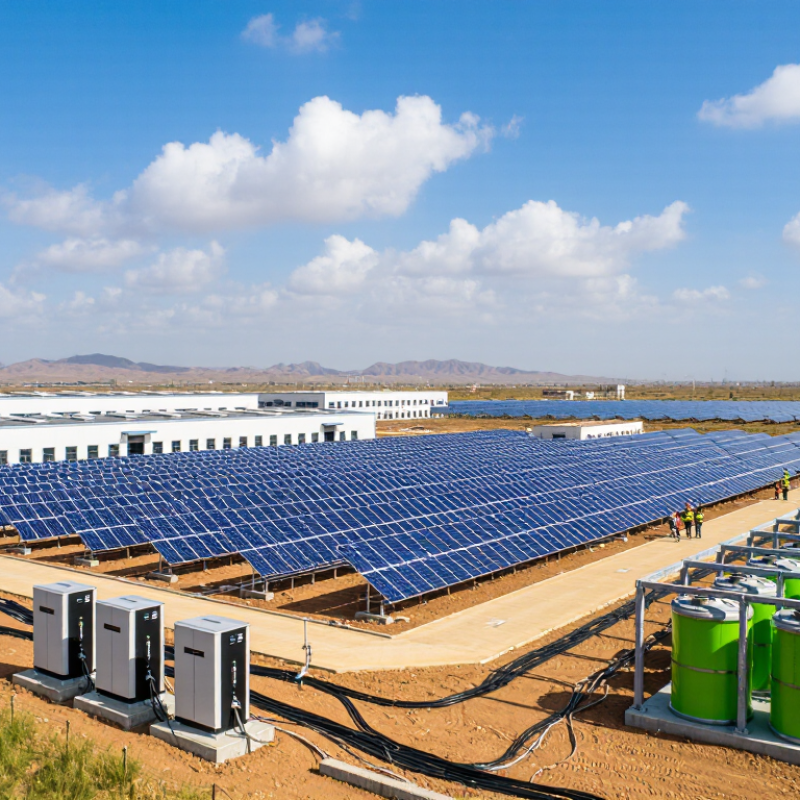
Solar system suppliers in China may provide more than photovoltaic panels. Many offer inverters, mounting structures, cables, batteries, and system design support. Some handle export packaging and shipping, while others coordinate installation through local partners. Service levels vary. A practical quote should list component models, rated output, operating conditions, delivery terms, and warranty coverage. Ask whether the proposed system suits your roof, grid connection, and daily energy use. A low price alone tells little.
Tips: Request a complete bill of materials, not just a panel price. Compare inverter capacity and battery usable energy. Check product test documents and warranty terms directly. Keep written records of any performance claims.
Suppliers may also provide remote monitoring tools, commissioning guidance, and troubleshooting support. These services can matter when a system shows an unexpected drop on a cloudy afternoon. Still, “support included” can mean different things; ask who responds, how quickly, and what costs extra. Review sample monitoring reports and clarify replacement procedures before ordering. A polished catalog is useful, but it cannot reveal every weak point. I would also ask for references from projects with similar weather and installation conditions.
Which Are the Top 10 Solar System Suppliers in China? — What Solar System Suppliers in China Offer
| No. | Supplier Segment | Typical Products or Services Offered | Common Applications | What Buyers Usually Compare |
|---|---|---|---|---|
| 1 | Polysilicon suppliers | High-purity polysilicon feedstock used to manufacture solar ingots and wafers. | Upstream photovoltaic manufacturing. | Purity specifications, consistency, production capacity, delivery schedule, and quality documentation. |
| 2 | Ingot and wafer suppliers | Crystalline-silicon ingots and wafers supplied to solar-cell manufacturers. | Solar-cell production lines. | Wafer dimensions, thickness, resistivity, breakage rate, lot consistency, and traceability. |
| 3 | Solar-cell suppliers | Photovoltaic cells in formats used to assemble crystalline-silicon modules. | Module manufacturing. | Cell efficiency range, electrical parameters, dimensions, appearance, and reliability test results. |
| 4 | Solar-module suppliers | Finished photovoltaic modules, including monocrystalline silicon products in common residential, commercial, and utility-scale formats. | Rooftop arrays, ground-mounted projects, and solar farms. | Rated power, module efficiency, dimensions, mechanical-load ratings, product warranties, and certifications required for the destination market. |
| 5 | Solar-inverter suppliers | String, central, and hybrid inverters that convert photovoltaic direct current into alternating current; some models include monitoring or storage interfaces. | Grid-connected and hybrid solar installations. | Rated output, conversion efficiency, grid compatibility, protection functions, monitoring, and after-sales support. |
| 6 | Battery-storage suppliers | Battery packs or energy-storage systems, commonly lithium-ion, with battery-management and control components. | Backup power, self-consumption, and solar-plus-storage projects. | Usable capacity, power rating, cycle-life test conditions, safety features, compatibility, and warranty terms. |
| 7 | Mounting-system suppliers | Rooftop and ground-mount structures, rails, clamps, foundations, and related installation hardware. | Residential roofs, commercial rooftops, and utility-scale sites. | Material and corrosion protection, wind and snow-load design, roof compatibility, installation method, and structural calculations. |
| 8 | Electrical balance-of-system suppliers | Photovoltaic cables, connectors, combiner boxes, fuses, isolators, circuit breakers, and surge-protection devices. | Electrical connections and protection throughout solar systems. | Voltage and current ratings, environmental resistance, applicable safety standards, compatibility, and product documentation. |
| 9 | Solar charge-controller suppliers | MPPT or PWM controllers that regulate charging between solar modules and batteries. | Off-grid systems, small solar installations, and selected hybrid applications. | PV input limits, charging current, battery compatibility, operating temperature, protection features, and monitoring options. |
| 10 | System integrators and EPC providers | Project design, equipment sourcing, installation, grid connection, testing, and commissioning; service scope varies by provider. | Residential, commercial, industrial, and utility-scale projects. | Engineering experience, design assumptions, equipment specifications, project schedule, commissioning scope, and service responsibilities. |
Note: This table describes ten common supplier segments and their typical offerings in China’s solar supply chain. It is not a company ranking, and specific products, certifications, and service availability vary by supplier and destination market.
Related Posts
-
10 Best Solar Systems for Home Use
-
China Best Residential Solar Systems for Global Buyers
-
What Are the Best Home Solar Systems in China?
-
China Top Solar Service Providers for Sustainable Energy Solutions?
-
Top Green Energy Solar Trends for 2026 What to Know?
-
How to Choose a Home Solar System with Battery Storage in 2026?