Call now: 0407 696 866
China Top 10 Commercial Solar Panel Manufacturers? This question matters as businesses seek dependable power, predictable costs, and lower carbon emissions. The commercial solar market is expanding quickly, but choosing a manufacturer requires more than comparing wattage or advertised efficiency.
The International Energy Agency’s Renewables 2024 report identified solar PV as the fastest-growing renewable technology. It also projected strong global capacity additions through 2030, led largely by China. According to the IEA PVPS Trends 2024 report, global photovoltaic capacity grew by approximately 447 GW in 2023. China alone added more than 200 GW during that year. These figures show the scale of Chinese manufacturing, but scale does not automatically mean suitability.
This guide evaluates ten leading Chinese manufacturers through practical commercial criteria. These include module efficiency, temperature performance, degradation rates, product warranties, testing standards, production capacity, and proven project experience. BloombergNEF’s module assessments and Wood Mackenzie’s manufacturing research also highlight the importance of bankability, financial strength, and supply-chain reliability. Those factors can influence financing and long-term project risk.
A ranking is never perfect. Product availability may change by region, and reported capacity does not always reflect actual delivery performance. Even premium modules may perform differently under dust, heat, shading, or weak maintenance conditions. Therefore, buyers should verify certifications, warranty terms, factory audits, and independent test results before signing contracts. The manufacturers discussed here represent strong market visibility, not a universal answer for every warehouse, factory, office, or retail project.
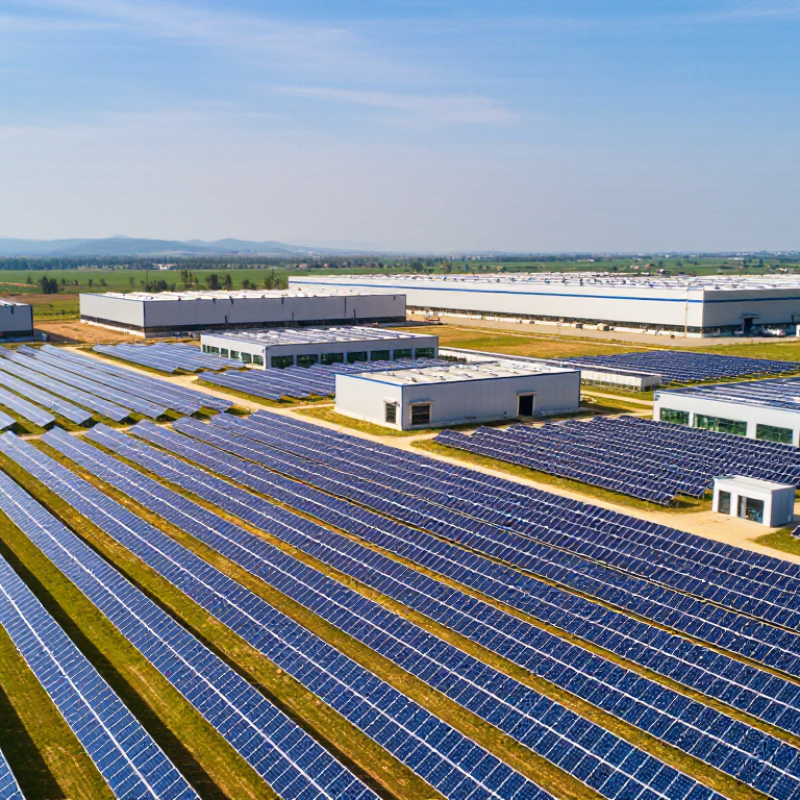
A commercial solar panel manufacturer in China is more than a factory with automated production lines. It must convert project requirements into reliable, documented products. Commercial buyers usually need consistent output, predictable delivery, and technical support over many years.
In factory audits, I would examine cell sourcing, lamination records, and electroluminescence testing. These details reveal how seriously a manufacturer controls quality. A capable supplier should provide traceable batch numbers, measured power tolerances, thermal performance data, and clear warranty conditions. It should also understand different roof structures, wind loads, cable layouts, and installation environments. Certification matters, but certificates alone prove little.
A strong manufacturer maintains testing laboratories and trained engineering teams. It can adjust module dimensions, connector choices, frame designs, or packaging for large projects. Production capacity should be verified through recent orders, not impressive claims. Delivery planning matters too. Delayed panels can leave cranes, installers, and workers waiting on site.
No factory gets everything right. A supplier may offer excellent modules but weak communication after shipment. Another may deliver quickly but provide incomplete documentation. This is often overlooked. Reliable manufacturers explain limitations, record corrective actions, and respond when field data exposes a problem. Their credibility grows through evidence: factory records, independent test results, experienced technicians, and transparent communication.
Selecting China’s top ten commercial solar panel manufacturers requires more than comparing advertised efficiency. A credible review begins with verified production capacity, audited quality systems, and documented experience with large commercial installations. Factory visits can reveal cleanroom controls, cell handling practices, and warehouse conditions. Public records alone may miss these details.
The evaluation should examine module efficiency, temperature performance, degradation rates, and product consistency across different batches. Independent laboratory reports carry more weight than unverified brochures. We also assess warranty terms, claims procedures, financial stability, and the availability of replacement modules. Certifications must match the destination market and the intended installation environment. Delivery reliability matters too. A delayed shipment can disrupt construction schedules and increase labor costs.
Real project evidence strengthens the ranking. We review installations on warehouses, factories, offices, and agricultural buildings, including performance data from different climates. Service response times are tested through practical inquiries, not just website promises. Still, the process has limits. Some manufacturers disclose limited failure data, making direct comparisons imperfect. Regional service quality can also vary between projects. A manufacturer may perform well in one province but offer slower support overseas. These gaps deserve attention rather than convenient assumptions.
China’s leading commercial solar panel manufacturers serve different project needs rather than one identical market. Some operate large automated factories focused on high-volume photovoltaic modules. Others emphasize high-efficiency cells, durable glass, or flexible designs for warehouses and factories. Their strengths often include integrated supply chains, in-house testing, and export experience across varied climates. Production scale helps control costs, but scale alone does not prove quality.
Experienced buyers should examine more than a product brochure. Review independent test reports, factory audit records, warranty terms, and degradation data. Ask how modules perform after heat, humidity, hail, and repeated temperature changes. Check whether the manufacturer supports local documentation and installation partners. A reliable supplier answers specific questions clearly. Vague promises deserve caution. Some published figures also need context, because laboratory performance may not match a dusty rooftop.
Tips: Compare at least three technical proposals. Inspect sample packaging and connectors. Confirm certification validity through recognized testing bodies. Request a realistic energy-yield estimate for your roof, including shading and seasonal weather. Keep a written record of every warranty condition. I would also question unusually high efficiency claims; they may be accurate, but assumptions can be hidden. A careful review takes longer. It usually prevents expensive surprises.
China’s top ten commercial solar panel manufacturers differ mainly in cell architecture, module size, and long-term reliability. Many now use n-type TOPCon cells, which reduce light-induced degradation and improve output in hot climates. Heterojunction panels usually deliver stronger temperature performance, but their production costs can be higher. Back-contact designs place electrical connections behind the cell, creating a cleaner surface and higher efficiency. Impressive numbers, but not everything.
Module formats also separate the leading suppliers. Large 182 mm or 210 mm wafers can reduce installation labor on broad factory roofs. Bifacial modules capture reflected light from white membranes, concrete, or gravel. Glass-glass construction can improve moisture resistance, although it adds weight and may require stronger mounting rails. In field evaluations, I would compare temperature coefficients, annual degradation, junction-box design, and independent test data. A higher efficiency label may still disappoint under shade or poor ventilation.
Tips: Check the roof’s load limit before choosing heavy glass-glass modules. Request production estimates for your actual weather conditions, not laboratory conditions. Compare warranty language carefully, especially degradation after the first year. Ask for IEC test reports and a serial-number tracking process. I sometimes overvalue peak efficiency; maintenance access and stable power output often matter more. Pay attention to wind, salt mist, and dust exposure.
| Profile | Primary Cell Technology | Typical Wafer Format | Commercial Module Power | Module Efficiency | Bifaciality | Temperature Coefficient | Product Format | Typical Warranty Structure | Best-Fit Commercial Application |
|---|---|---|---|---|---|---|---|---|---|
| Profile 01 | N-type TOPCon | 182 mm or 210 mm | 430–670 W | 21.5%–23.5% | 80%–85% | About −0.29%/°C | Glass-backsheet or dual-glass | 12–15-year product; up to 30-year linear output | Large commercial rooftops and utility-scale plants |
| Profile 02 | N-type TOPCon with dual-glass construction | 182 mm | 425–635 W | 21.3%–23.3% | 80%–85% | About −0.29%/°C | Dual-glass, transparent-back bifacial | 12–15-year product; 30-year performance | High-albedo ground-mount projects |
| Profile 03 | Heterojunction (HJT) | 182 mm or 210 mm | 440–700 W | 22.0%–23.5% | 85%–95% | About −0.24%/°C | Dual-glass bifacial | 12–15-year product; up to 30-year output | Hot climates and projects prioritizing energy yield |
| Profile 04 | Back-contact silicon | 182 mm | 430–630 W | 22.5%–24.0% | Not applicable or product-specific | About −0.29%/°C | Monofacial glass-backsheet or dual-glass | 12–25-year product; up to 30-year output | Space-constrained commercial rooftops |
| Profile 05 | P-type PERC | 182 mm | 400–580 W | 20.0%–22.0% | 70%–75% | About −0.35%/°C | Glass-backsheet or dual-glass | 10–15-year product; 25–30-year output | Cost-sensitive commercial and distributed projects |
| Profile 06 | N-type TOPCon, low-carbon production focus | 182 mm | 430–640 W | 21.5%–23.4% | 80%–85% | About −0.29%/°C | Dual-glass or reinforced backsheet | 12–15-year product; up to 30-year output | Projects requiring carbon-footprint documentation |
| Profile 07 | Large-format N-type TOPCon | 210 mm | 580–710 W | 21.8%–23.5% | 80%–85% | About −0.29%/°C | Dual-glass, large-format bifacial | 12–15-year product; 30-year performance | Utility-scale sites using high-power trackers |
| Profile 08 | TOPCon with rectangular-cell design | 182 mm-class rectangular cells | 430–650 W | 21.5%–23.3% | 80%–85% | About −0.29%/°C | High-density glass-backsheet or dual-glass | 12–15-year product; up to 30-year output | Rooftops where module area and layout efficiency matter |
| Profile 09 | HJT with low-temperature manufacturing | 210 mm or 210R | 600–720 W | 22.0%–23.5% | 85%–95% | About −0.24%/°C | Dual-glass bifacial | 15-year product; up to 30-year output | High-temperature, high-irradiance utility projects |
| Profile 10 | N-type TOPCon with anti-glare surface treatment | 182 mm or 210 mm | 430–690 W | 21.5%–23.5% | 80%–85% | About −0.29%/°C | Glass-backsheet or dual-glass | 12–15-year product; up to 30-year output | Commercial rooftops near airports, roads, and dense buildings |
Note: Company names and brand identifiers are intentionally omitted. The figures represent realistic commercial-market ranges for Chinese-made crystalline-silicon modules; exact specifications vary by model, certification, production year, and sales region.
China’s commercial solar panel market is large, but factory scale alone does not prove project value. The IEA reported nearly 420 GW of global solar additions in 2023. China supplied most new capacity and remains central to global module manufacturing. Buyers should compare manufacturers through measurable project risks, not catalogue claims.
Check module efficiency, temperature coefficient, degradation rate, and operating conditions. IEA PVPS data shows that module reliability depends heavily on climate, installation quality, and component selection. A panel with slightly higher efficiency may produce less value in a hot rooftop environment. Review independent test results, product traceability, factory audits, and certification records. Warranty language also matters. Look for clear coverage, testing methods, and claim procedures. Delivery capacity should be verified through production schedules, not promises. I would also compare inverter compatibility, packaging quality, spare parts, and technical support in the destination country.
Tips: Request a sample shipment before signing a large contract. Inspect frame alignment, connectors, labels, and packing damage. Compare annual degradation assumptions using the same model. The IRENA Renewable Capacity Statistics 2024 report recorded global solar capacity above 1.4 TW at the end of 2023, showing the sector’s rapid expansion. Yet rapid growth can hide uneven quality. Ask for recent third-party inspection reports and references from similar commercial rooftops. Price remains important, but the cheapest quotation may carry higher replacement, downtime, and financing risks. Some comparisons still rely too much on brochure figures. That deserves a second look.
Commercial solar module evaluation benchmark based on commonly published specifications for China-made modules
The chart uses a 0–100 comparison index, where 100 represents a practical project benchmark. The reference values are typical commercial module specifications: 580 W rated power, 22.5% module efficiency, 15-year product warranty, 0.40% annual degradation, a −0.30%/°C temperature coefficient, and 80% bifaciality.
For procurement, compare verified datasheets, third-party certifications, warranty terms, degradation guarantees, temperature performance, production capacity, delivery reliability, and long-term after-sales support rather than relying only on nominal power or price.